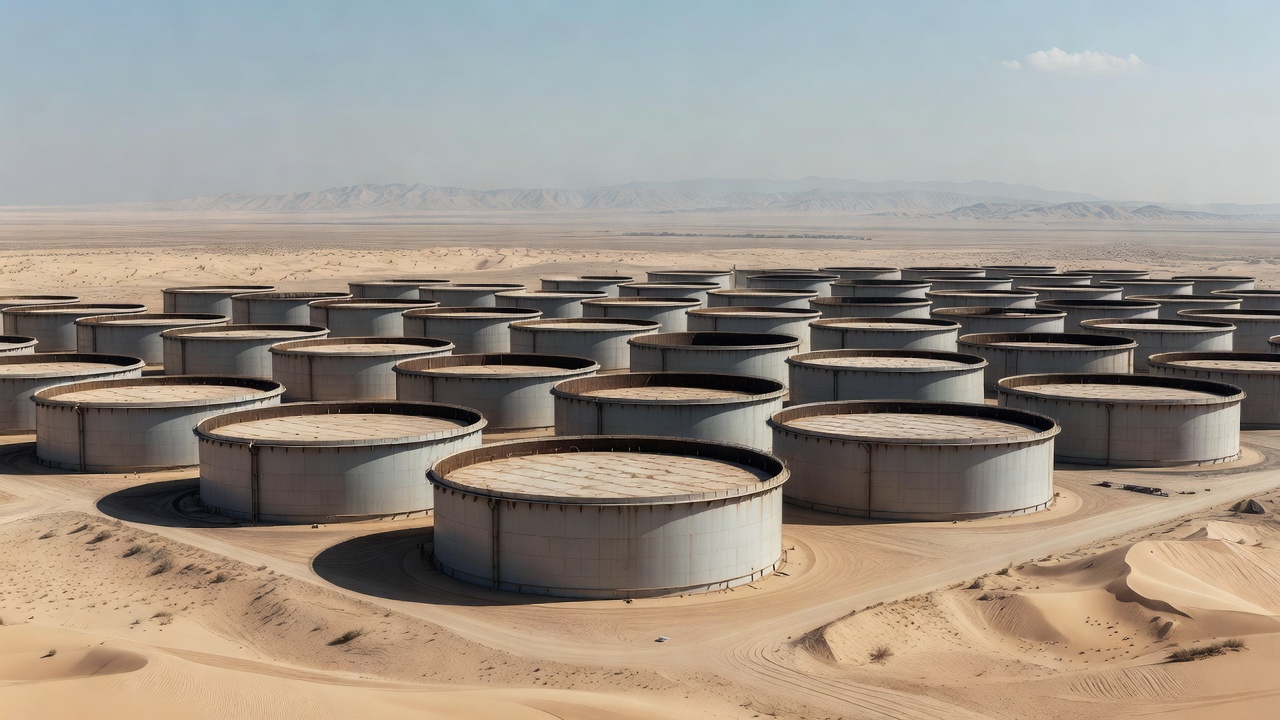
US Treasury Secretary Scott Bessent announced Operation Economic Outcast on August 27 as the United States moved to broaden secondary sanctions and naval enforcement six months into a conflict with Iran that has produced no lasting settlement. Bessent stated that the objective was to cut off every economic channel sustaining the Iranian government, according to an Arab Times report from Washington. The measures focus on oil exports that have fallen to zero, blocked foreign currency reserves and expanded penalties on third-party entities facilitating Iranian trade. Iranian Central Bank Governor Abdolnaser Hemmati confirmed in a televised interview that the country was no longer exporting oil because of restrictions imposed during the conflict.
Hemmati told Iranian television last week that oil exports had dropped to zero amid the war and sanctions while the rial hit a record low against the US dollar. The International Monetary Fund projected that Iran’s economy would contract by 6.1 percent in 2026 with average inflation reaching 68.9 percent, up from 50.9 percent the previous year. Kpler data cited in the report showed Iranian crude loadings plunging from an average 893,000 barrels per day in July to 156,000 barrels per day through August 17. The US restored its naval blockade of Iranian ports on July 14 after a brief pause, a step Max Gillman of the University of Missouri-St. Louis described as the main enforcement measure likely to continue indefinitely.
Washington has also frozen portions of Iran’s foreign currency reserves and withheld funds anticipated under the June Islamabad Memorandum, Hemmati stated in his remarks. Iranian authorities have turned to cryptocurrency, barter arrangements and intermediaries in third countries to circumvent restrictions, yet US officials are targeting those channels with new designations. The Treasury is preparing sanctions on more than 60 entities, individuals and vessels worldwide that it accuses of supporting Iranian networks, the Arab Times reported. Bessent warned that any entity facilitating money laundering for Iran would face removal from the US dollar system and gave foreign governments and businesses defined timelines to cease identified activities.
The latest actions extend secondary sanctions to transactions involving digital assets, technology, gold, aviation and shipping while specifically calling for closure of Iran’s Bank Melli branches abroad. Bessent said in the announcement that every country had a timeline to shut down the listed activities or face unilateral Treasury measures. These steps build on sanctions first imposed in November 1979 during the US embassy hostage crisis when President Jimmy Carter froze Iranian assets, according to a Brookings Institution historical assessment. Prior to the current conflict Iranian crude exports had recovered to an average of roughly 1.5 million barrels per day in 2024 and 2025 despite earlier rounds of pressure, Clingendael Institute data indicated.
Iran’s labor market has deteriorated alongside the currency collapse, with the official unemployment rate climbing to 9.1 percent in the spring and employment falling by around 450,000 from a year earlier. Point-to-point consumer inflation reached 87.9 percent in July, according to Iran’s Statistical Center. The rial traded at about 2 million to the US dollar on the informal market in late August. Such conditions have forced Iranian households to absorb sharply higher prices for imported goods while the government struggles to maintain public sector salaries.
Bessent acknowledged that overly abrupt enforcement risked disrupting the global financial system and pushing oil prices higher through reduced supply. Gillman noted that sustained economic pressure via the naval blockade could prove less destabilising than renewed large-scale military action. The Trump administration maintains that tightened enforcement will raise the cost of Iran’s current policies enough to force political concessions, yet Tehran has developed resilient alternative trade mechanisms over decades of sanctions. The Arab Times reported that Iran’s leadership continues to frame economic hardship as evidence of national resilience against foreign pressure, leaving the outcome of Operation Economic Outcast uncertain.
Добавить комментарий