Рубрика: Kuwait

  • Kuwait Electricity Minister Revokes Judicial Powers From Six Team Members

    Kuwait Electricity Minister Revokes Judicial Powers From Six Team Members

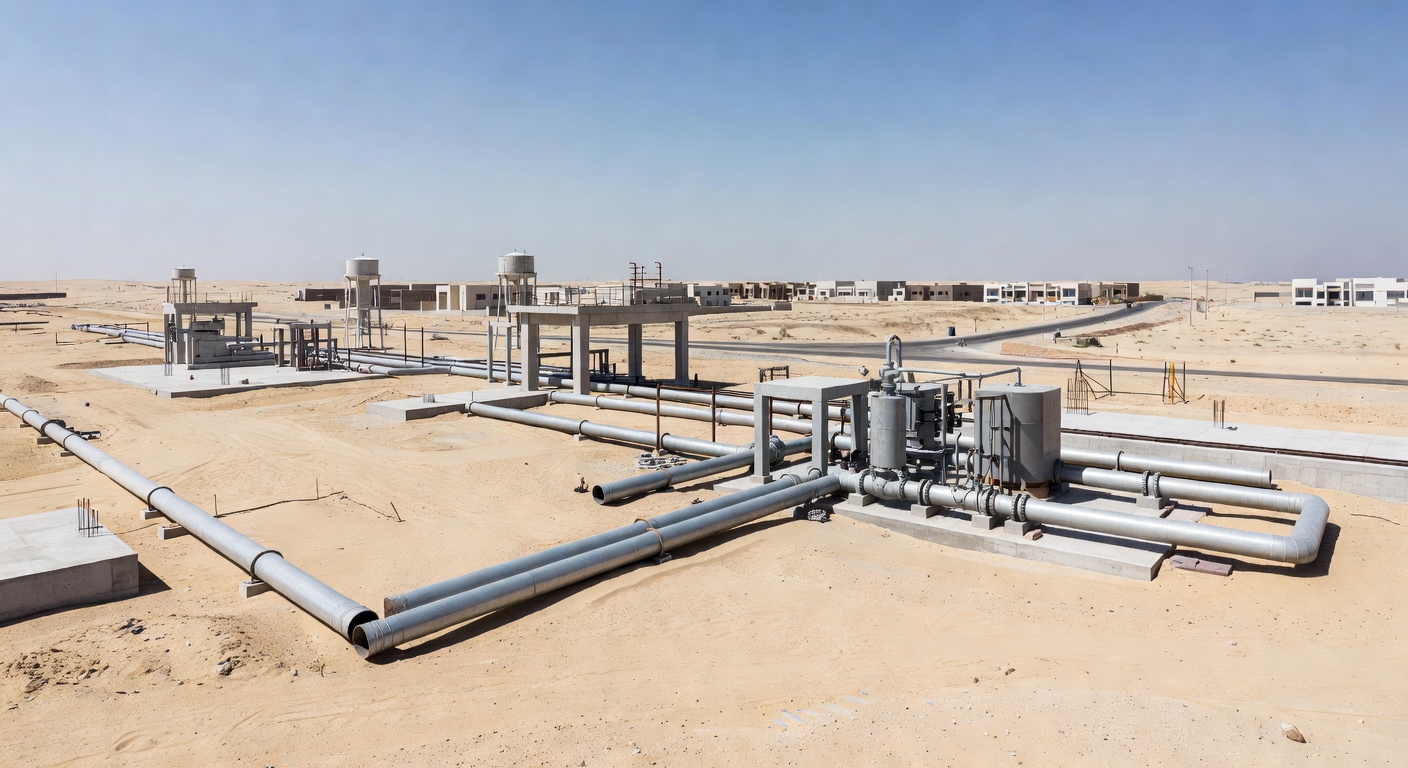
    Dr. Subaih Al-Mukhaizeem withdrew the judicial authority of six members from the Ministry of Electricity, Water and Renewable Energy’s judicial enforcement team on May 26, according to Arab Times. The minister cited the interest of work in the decision affecting employees tasked with monitoring electricity and water violations under Law No. 48 of 2005. The ministry also signed a KD29.857 million contract the same week for construction of a water pumping station in Mutla’a Residential City to support freshwater needs in new urban developments.

    The Arab Times reported that the six individuals are ministry employees who had formed part of the judicial team granted enforcement powers. No additional details on the reasons for the specific revocations were included in the ministerial decision. Judicial enforcement teams within the ministry operate under the framework of Law No. 48 of 2005, which equips officers to address network encroachments and water waste, a ministry announcement from March 2025 confirmed.

    The ministry’s website documented the graduation of a fresh batch of 23 judicial officers in March 2025 under the patronage of Undersecretary Dr. Adel Al-Zamel. An engineer speaking at that event underlined the officers’ role in controlling violations and correcting improper installations across electrical and water systems. Four batches had completed training at the Higher Judicial Institute since the law entered into force, the ministry statement noted at the time.

    Arab Times reported that the ministry signed the contract for construction, completion and maintenance of the water pumping station and associated facilities at Site One in Mutla’a Residential City. Ministry sources disclosed that the KD29.857 million project is included in plans to expand the freshwater system serving emerging residential cities. The Water Projects Department is executing the works in line with latest international specifications to guarantee continuous and efficient water delivery to consumers.

    The sources told Arab Times that infrastructure projects in Mutlaa City are advancing under the direct supervision of Al-Mukhaizeem and Dr. Adel Al-Zamel. Both officials have prioritized timely completion to fulfill freshwater demands for the city’s future residents. The full system encompasses the pumping station together with transmission lines, underground reservoirs and water towers, while the contract incorporates periodic maintenance to sustain operations.

    Mutla’a forms one of Kuwait’s largest new residential expansions, where water and wastewater infrastructure projects address demands created by population growth and urban planning objectives, according to descriptions from the Arab Urban Development Institute. Comparable programs in South Al-Mutlaa have emphasized connections to the national desalination network for potable supply. The Ministry of Electricity, Water and Renewable Energy has scheduled dozens of electricity and water network contracts for the 2026/2027 fiscal year to match ongoing residential development, ministry planning documents show.

  • Kuwait Food Authority Details Multi-Stage Process Guaranteeing Meat Product Safety

    Kuwait Food Authority Details Multi-Stage Process Guaranteeing Meat Product Safety

    The Public Authority for Food and Nutrition detailed on May 22 its rigorous multi-stage inspection process to guarantee meat safety in Kuwait, encompassing humane animal handling, Islamic slaughter, veterinary checks, official stamping and temperature-controlled storage and transport. The authority’s measures provide continuous monitoring from slaughter to consumer in support of a market where per capita consumption reaches about 69 kilograms annually. [Markdown Guide](https://www.markdownguide.org)

    The process ensures animal welfare from the moment of reception in controlled environments, the authority said. Veterinary officers conduct detailed examinations after halal-compliant slaughter to confirm that only healthy meat advances. Carcasses receive thorough cleaning and an official health stamp that serves as visible proof of compliance with all required standards. This initial sequence forms the foundation for subsequent handling stages.

    Meat passing these checks moves into specialized refrigeration units that preserve its quality until distribution. Vehicles equipped for temperature regulation transport the products to various points of sale across Kuwait. The Public Authority for Food and Nutrition maintains that this cold chain integrity is non-negotiable for preventing contamination and spoilage. Such logistics are integral to the overall safety guarantee extended to the public.

    Regulatory requirements enforced by the authority mandate that all meat imports be supported by halal slaughter certificates issued by approved bodies in the exporting country and authenticated locally. The Raqib electronic system facilitates these imports by allowing efficient submission and review of compliance documentation. Officials review both the certificates and conduct their own assessments upon entry. The combined system helps manage the high volume of meat products entering the local market each year.

    A Credence Research report places the value of Kuwait’s meat market at USD 1,289.70 million in 2023, with projections for expansion to USD 1,879.81 million by 2032 at a compound annual growth rate of 4.17 percent. The Food Export Association of the Midwest USA has reported annual per capita meat consumption in the country at approximately 69 kilograms. Kuwait depends extensively on imports to fulfill this demand, as local production capacity is constrained by the prevailing arid climate and environmental conditions.

    The Public Authority for Food and Nutrition has conducted regular compliance checks at retail and processing sites. In March, officials closed five food establishments in the Capital Governorate after uncovering violations involving spoiled meat, adulterated products and hygiene failures. These actions remove non-compliant operators from the market. The inspections target issues such as improper storage that could affect product safety.

  • Kuwaiti Court Jails Five Over Fake Beachfront Chalet Fraud Scheme

    Kuwaiti Court Jails Five Over Fake Beachfront Chalet Fraud Scheme

    A Kuwaiti Criminal Court on May 21 convicted a Kuwaiti woman, three Egyptian partners and a Bedoun broker of real estate fraud and money laundering, sentencing each to five years in prison with hard labor and imposing a collective fine of approximately KD 5.3 million. The defendants deceived buyers by marketing nonexistent beachfront chalets in Al-Khairan, Kuwait, and at a resort project in Egypt through misleading promotions at licensed exhibitions, the court determined in a ruling that also led to the acquittal of five other accused individuals.

    The verdict detailed how the group relied on fraudulent property listings to collect large sums from victims before structuring financial transactions to launder the proceeds. Court records examined the full scope of the organized scheme that exploited demand for coastal real estate. Investigations linked the activity to promotions that violated standing regulations on real estate exhibitions. Lawyer Ali Al-Attar told local media that the decision reinforces Ministry of Commerce Resolution No. 239/2013, which establishes obligations for exhibition organizers to protect investors from deception.

    This prosecution forms part of a recurring pattern of real estate fraud before Kuwaiti courts. Gulf News reported in September 2024 that the top appeals court upheld a 10-year prison term and KD 3 million fine against a real estate company manager convicted of selling phantom buildings. A separate 2020 matter that returned to the courts involved the advertising of chalets valued at roughly KD 4.5 million, according to Kuwait Local. Such cases have led regulators to increase oversight of property promotions across the sector.

    The Ministry of Interior has issued repeated warnings about fake online advertisements for chalet sales and rentals. Scammers routinely use stolen photographs and descriptions of genuine properties to create credible but fictitious offers, a tactic examined in a 2024 Zawya assessment of oversight gaps in Kuwait’s real estate market. Officials continue to urge potential buyers to confirm all documentation through official channels before any payment. These alerts underscore vulnerabilities in the beachfront segment where demand remains consistently high.

    Kuwait enforces tight restrictions on coastal developments, including a cap on the number of chalets permitted in areas such as Al-Khairan. The inclusion of a nonexistent Egypt resort in the fraudulent portfolio added complexity by suggesting a broader legitimate portfolio than existed. The court set the collective fine at KD 5.316 million, corresponding to the volume of funds obtained from victims. Provisions in the ruling allow victims to pursue restitution through separate legal procedures.

    The Criminal Court acquitted a Kuwaiti man and woman accused of serving as nominal partners in the company that orchestrated the promotions. Three real estate brokers charged in connection with the transactions also received acquittals after the court examined evidence of their individual involvement. Arab Times characterized the matter as among the more significant real estate fraud cases prosecuted in Kuwait in recent years. The differentiated verdicts reflect a detailed review of each participant’s role within the network.

  • Kuwait Seizes 1,430 Counterfeit Goods at Friday Market in Broad Commercial Sweep

    Kuwait Seizes 1,430 Counterfeit Goods at Friday Market in Broad Commercial Sweep

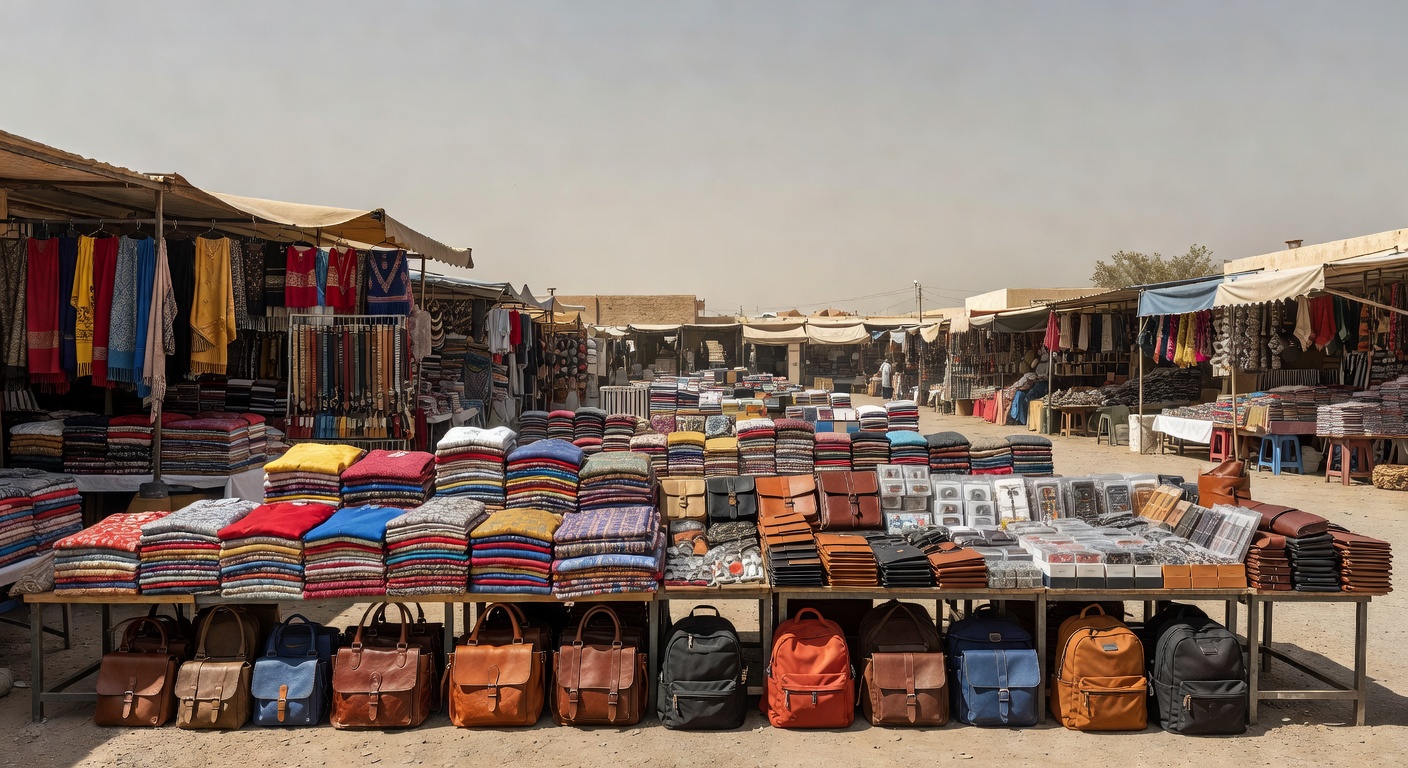
    On May 17, Kuwait’s Commercial Control and Consumer Protection Department seized 1,430 counterfeit goods at the Friday Market while conducting inspections in Al Farwaniyah Governorate that produced 22 enforcement reports and led to two shop closures. The campaign, run in coordination with the Ministry of Interior, focused on violations of a new cash transaction ban under Ministerial Resolution No. 32 of 2026, with counterfeit cases sent to the Commercial Prosecution, the department said.

    The department’s tally from Al Farwaniyah listed 22 reports that covered misleading advertisements for services not actually provided and instances where private pharmacies failed to observe the prohibition on cash transactions for certain activities. Officials closed one outlet for selling expired herbal products and a second for refusing to cooperate with inspectors performing their duties. Two further notices addressed businesses operating without a license or engaging in activities that fell outside the scope of their approved permits.

    Emergency inspection teams working with the Ministry of Interior apprehended a health institute operating in breach of the ministerial resolution on cash transactions. The authorities identified additional violations at the same establishment through the Interior Ministry, resulting in joint legal proceedings by both bodies. The department has instructed that all such files move forward for full prosecution.

    Inspectors at the Friday Market documented each of the 1,430 seized counterfeit items before transferring the complete case files to prosecutors. The department described the action as part of its series of intensified campaigns across multiple governorates aimed at improving regulatory compliance. These efforts have targeted both counterfeit distribution and administrative breaches in commercial outlets.

    The operation forms part of a continuing pattern of market oversight by the ministry. In January the Commercial Control Department confiscated 1,828 counterfeit items including perfumes, accessories, bags and leather products from two shops in Salmiya, according to a Times Kuwait report. A February campaign yielded around 800 counterfeit women’s shoes and handbags bearing fake international trademarks, Arab Times reported.

    Counterfeit trade persists as a notable issue within Kuwait. The Organised Crime Index 2025 assigned the market a score of 5.50 and observed that authorities have seized large volumes of fake electrical products, clothing and luxury items in recent years. A separate 2025 OECD-EUIPO analysis of global fakes found that postal services accounted for 58 percent of seizures by volume while sea freight carried a higher share of total value.

  • Crown Prince Receives Bahrain Interior Minister at Bayan Palace

    Crown Prince Receives Bahrain Interior Minister at Bayan Palace

    His Highness the Crown Prince Sheikh Sabah Khaled Al-Hamad Al-Sabah warmly welcomed Bahrain’s Minister of Interior General Sheikh Rashid bin Abdullah Al Khalifa and his accompanying delegation at Bayan Palace on May 17. The Bahraini minister was conducting an official visit to Kuwait, according to KUNA. Also in attendance were acting Prime Minister and Minister of Interior Sheikh Fahad Yousef Saud Al-Sabah, Head of the Diwan of HH the Crown Prince Sheikh Thamer Jaber Al-Ahmad Al-Sabah and other high-ranking officials.

    The reception follows an extraordinary meeting of GCC interior ministers held in Riyadh on May 13. Bahraini Interior Minister General Sheikh Rashid bin Abdullah Al Khalifa chaired that session. GCC Secretary-General Jasem Mohamed Albudaiwi said the ministers reaffirmed that the security of GCC member states is indivisible and called for intensified coordination against emerging threats.

    The Riyadh gathering was convened following the arrest in Kuwait of cells allegedly linked to Iran’s Islamic Revolutionary Guard Corps, reports from Arab News and the Saudi Press Agency indicated. Ministers discussed ways to strengthen joint Gulf security cooperation in response to challenges arising from regional conflicts. Albudaiwi noted the importance of enhancing collaboration between interior ministries and relevant security authorities across the bloc.

    Kuwait’s Sheikh Fahad Yousef Saud Al-Sabah led the Kuwaiti delegation to the Riyadh meeting. In November 2025 he chaired the 42nd meeting of GCC interior ministers held in Kuwait City. That session resulted in approval of the GCC Security Strategy for Combating Money Laundering Crimes for 2026-2030, according to the GCC Secretariat.

    Additional outcomes from the November gathering included preparations for workshops on combating cybercrimes involving artificial intelligence as well as strategies for countering extremism. These preparations were developed in cooperation with the United Nations Office on Drugs and Crime, the GCC Secretariat said. The May 17 visit by General Sheikh Rashid bin Abdullah Al Khalifa to Kuwait provided a platform for senior officials from both countries to review progress on joint security efforts.

    Bilateral ties between Kuwait and Bahrain are anchored in their shared membership as founding states of the GCC established in 1981. In February 2026 Bahrain’s Crown Prince and Prime Minister Prince Salman bin Hamad Al Khalifa met with Kuwait’s Crown Prince to discuss ways to expand cooperation, according to a statement from the Bahraini Crown Prince’s office. These regular high-level exchanges cover a range of issues including security which formed the focus of the Bayan Palace meeting.