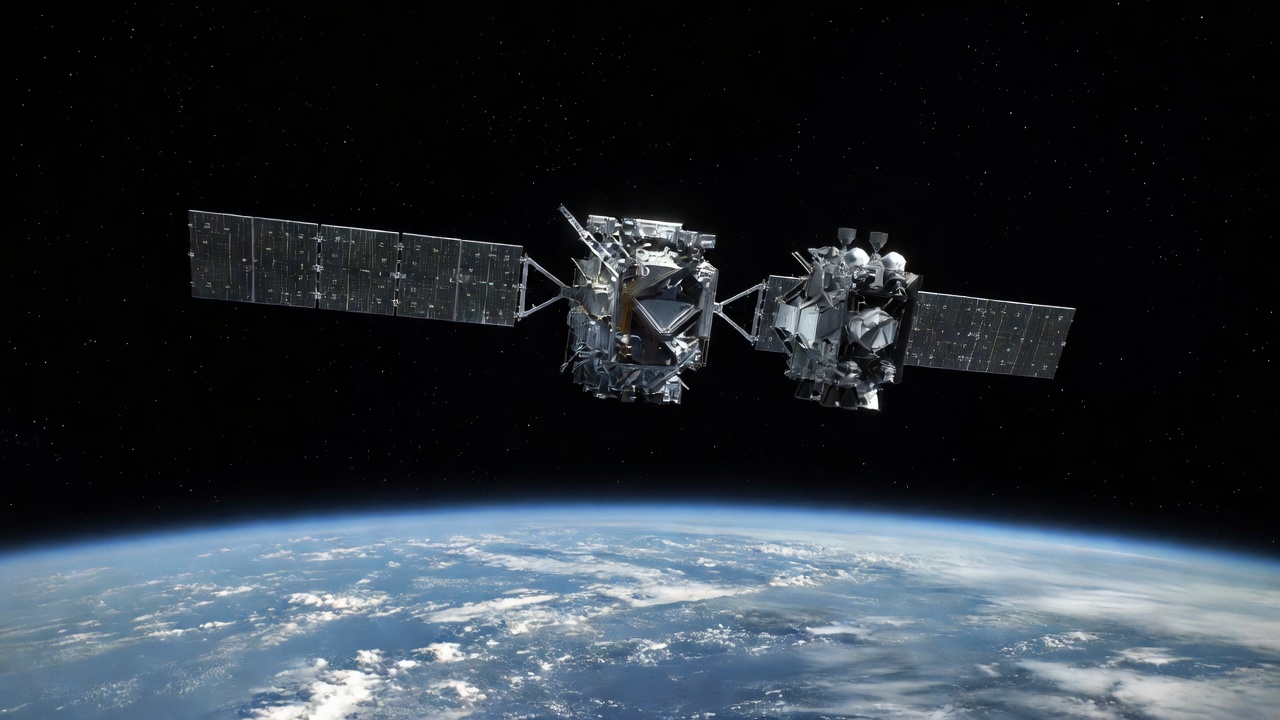
The decision dooms the Swift observatory to plunge through Earth’s atmosphere no earlier than October after more than two decades of service detecting powerful cosmic explosions. NASA and the startup jointly announced that the Link spacecraft will instead conduct proximity operations with the telescope to demonstrate technologies for future rescue missions. Increased solar activity had caused the observatory to lose altitude faster than anticipated, leading the agency to pay $30 million for the attempt to extend its life.
NASA awarded Katalyst Space Technologies a contract in September 2025 to rapidly develop and launch the servicing vehicle in under a year. The Link spacecraft launched on July 3, 2026, aboard a Northrop Grumman Pegasus XL rocket from Kwajalein Atoll in the Pacific. Flight controllers managed to stabilize an initial multi-axis spin but could not resolve ongoing issues with pointing and positioning necessary for rendezvous and capture.
NASA figures show the observatory has detected more than 1,760 gamma-ray bursts since its November 2004 launch, transforming understanding of these events through rapid multi-wavelength follow-up observations. By its 20th anniversary the mission had also logged 1,400 supernovae with its data appearing in more than 6,600 scientific publications, according to NASA. The telescope’s autonomous slewing to burst locations within minutes represented a first-of-its-kind capability that earlier observatories could not achieve.
Swift’s science instruments were deactivated earlier this year to minimize drag and slow its orbital decay, a NASA statement reported. As of Wednesday the observatory circled at 345 kilometers, well below its original 600-kilometer altitude. Without an orbital boost the agency expects the 21-year-old spacecraft to reenter later this year.
«This is not the outcome we were working toward, but it does not change why this mission was worth attempting,» NASA Administrator Jared Isaacman said in a statement. Katalyst CEO Ghonhee Lee said in a company release, «We took on this high-risk, high-reward challenge and are proud of the milestones we reached along the way. We have already learned a tremendous amount.» The firm added that lessons from the effort will inform subsequent in-orbit servicing attempts.
A NASA assessment found that the Hubble Space Telescope is experiencing parallel orbital decay from the same elevated solar activity, though no immediate follow-on mission has been confirmed. The Swift effort represented the first attempt by a commercial vehicle to capture and raise an uncrewed NASA science satellite not designed for servicing. Katalyst indicated the proximity demonstration phase will continue to extract additional technical value from the Link spacecraft.
Добавить комментарий