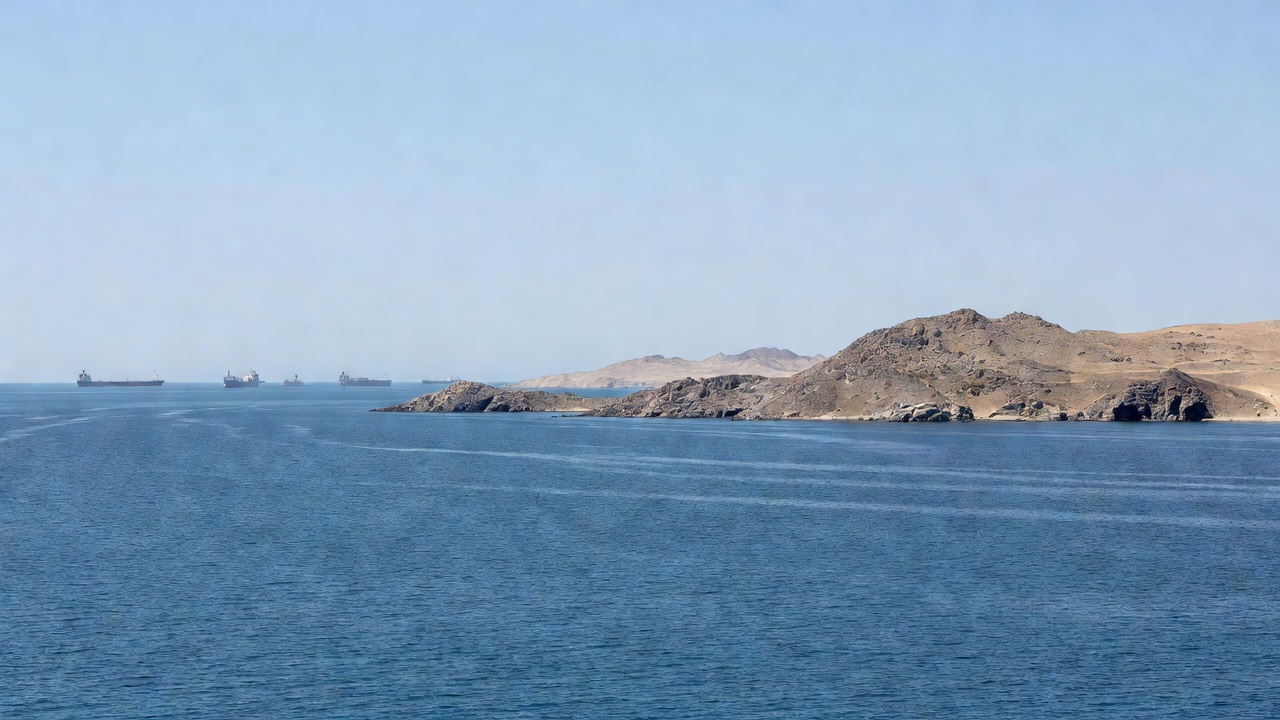
The United Kingdom Maritime Trade Operations reported receiving an account from the master of a third vessel who observed four unknown projectiles hitting two unidentified ships about four nautical miles west of Khasab in Oman. The observer was positioned six nautical miles from the site and reported that one of the vessels caught fire while the status of the second ship was unknown at the time of the alert. UKMTO issued Warning 133-26 at 1910 UTC on September 10 and stated that authorities had launched an investigation into the circumstances.
The maritime agency has not released the names or types of the affected vessels nor provided any immediate details on casualties or the extent of damage beyond the reported fire. Its advisory urged all vessels transiting the area to proceed with extreme caution and to report any suspicious activity promptly to the agency. The location near Oman’s Musandam peninsula places the event at the southern entrance to the Strait of Hormuz a passage that has seen repeated security incidents in recent weeks.
A similar strike occurred on August 8 when a vessel was hit by an unidentified projectile about 18 nautical miles east of Khasab causing a fire that crews later extinguished with no injuries or environmental damage reported according to an earlier UKMTO statement. On August 4 another cargo ship broadcast an emergency message after being struck by an unknown projectile approximately 20 nautical miles northeast of the same port prompting the agency to renew its safety warnings for the region. These events form part of a pattern that has included an attack on the Hercules Star off Dubai which killed a seafarer as well as claims by Iran’s Islamic Revolutionary Guard Corps of actions against multiple tankers and an unmanned surface vessel.
The IRGC had issued warnings to ships against using certain routes through the Strait of Hormuz without authorization from Tehran a development that coincided with continued maritime traffic in the area according to vessel tracking data. Regional reports have also noted at least 56 tankers operating without standard digital tracking or under what industry observers term digital darkness while facilitating oil exports from Arab Gulf states. Such practices have emerged as shipping companies adapt to elevated risks in the waterway.
The U.S. Energy Information Administration has estimated that around one fifth of global petroleum consumption transits the Strait of Hormuz each day making disruptions there a potential factor in worldwide energy market volatility. The International Energy Agency has similarly tracked how repeated incidents can affect supply chains and prompt shifts in routing or insurance costs for commercial operators. No group had claimed responsibility for the September 10 strikes as of the latest UKMTO update.
UKMTO has monitored several comparable events in the Gulf of Oman and Strait of Hormuz throughout 2026 issuing repeated cautions to the maritime community. Its latest warning follows a series of U.S. actions against Iranian-linked vessels and Iranian responses that have heightened tensions across the critical shipping corridor. The agency continues to gather information on the incident while emphasizing the need for vigilance among all vessels in the vicinity.
Добавить комментарий