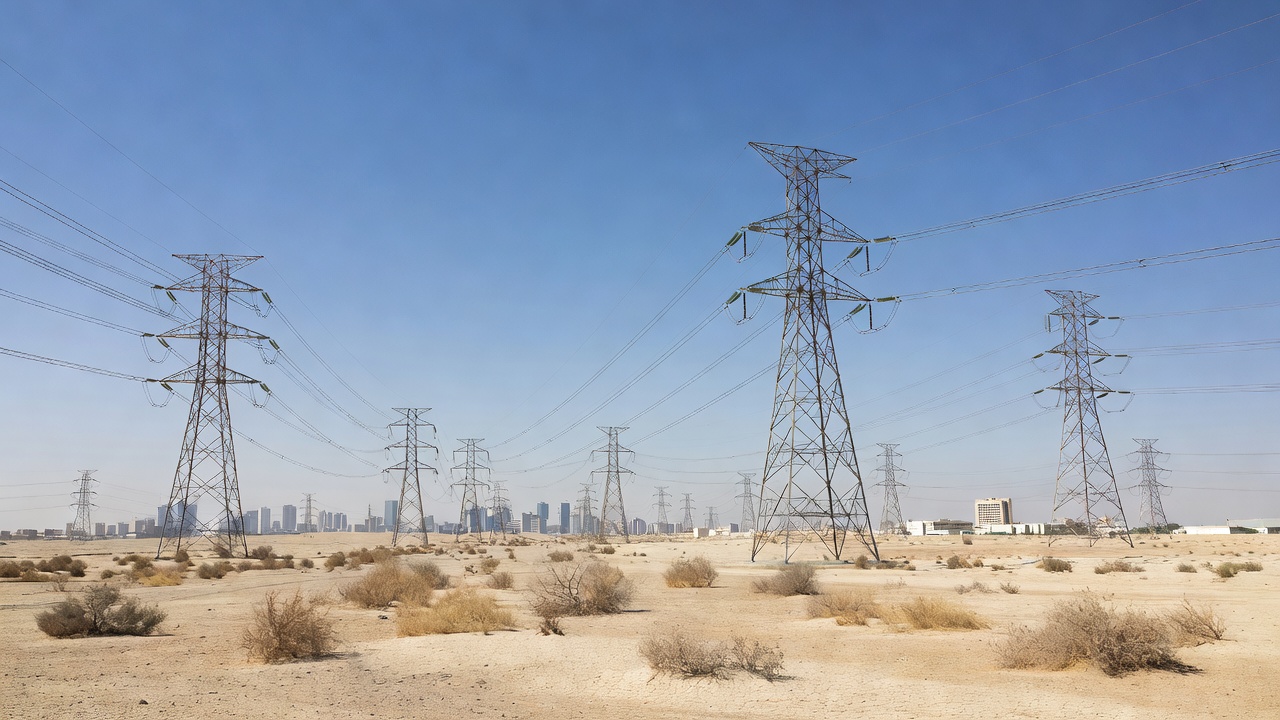
Arab Times reported that technical malfunctions at the Hawally main substation caused two sub-feeders to go out of service, resulting in a power outage that hit limited sections of Hawally Block 8 and parts of Mubarak Al-Kabeer. Emergency crews from the Ministry of Electricity, Water and Renewable Energy responded immediately and restored supply within a short period. The ministry noted that such incidents have increased during periods of peak consumption, which reached 12,400 megawatts in recent heatwaves according to ministry load data.
Ministry figures show Kuwait’s electricity demand has climbed steadily with sustained temperatures above 45 degrees Celsius, pushing the national grid to its limits during the summer months. A separate assessment by Times Kuwait placed the July 2026 peak at levels that required load management across residential and industrial zones to avoid broader blackouts. The ministry has activated its monitoring teams to track network performance continuously as maintenance on generation units continues.
In an announcement carried by Arab Times, the ministry urged residents to conserve electricity by setting air conditioners no lower than 24 degrees Celsius and avoiding high-consumption appliances between 11:00 am and 5:00 pm. Officials stated that these steps help stabilize the system and prevent unnecessary interruptions for all users. Similar calls for conservation were issued in April 2025 when planned outages affected the same governorates for up to two hours at a time.
The ministry’s records indicate that Hawally and Mubarak Al-Kabeer have experienced multiple brief disruptions over the past 18 months, often linked to sub-feeder failures at aging transformer stations. Public notifications via the Sahel application alerted residents in advance during scheduled maintenance windows, according to ministry statements. Teams completed repairs on the affected equipment without further reported incidents following the latest event.
Kuwait’s overall power infrastructure faces growing pressure from population growth and rising living standards, with Central Statistical Bureau data showing annual consumption increases averaging 5 to 7 percent in recent years. The ministry has initiated projects to expand capacity, including a KD1.994 million contract for a battery testing laboratory approved by the State Audit Bureau. This facility is designed to improve maintenance efficiency and reduce future outage risks across the grid.
Ministry spokespeople have reiterated that all outages are managed to last no longer than two hours when they occur, with priority given to restoring residential areas first. Arab Times noted that no injuries or major disruptions to essential services were reported in the latest incident. The authority continues to monitor weather forecasts that predict temperatures nearing 50 degrees Celsius in the coming days.
Добавить комментарий