Nepal’s National Disaster Risk Reduction and Management Authority issued fresh flood warnings throughout Sunday morning after Chinese officials notified their counterparts of increased upstream flows into the Bhotekoshi River. The authority’s chief executive Dharam Raj Uprety told the Associated Press that the alerts prompted text messages to residents in affected districts even as rescue teams cleared a key highway linking Kathmandu to hard-hit zones. Uprety said crews continued operations despite the risks, with the latest notices coming days after catastrophic flooding struck on Aug. 26.
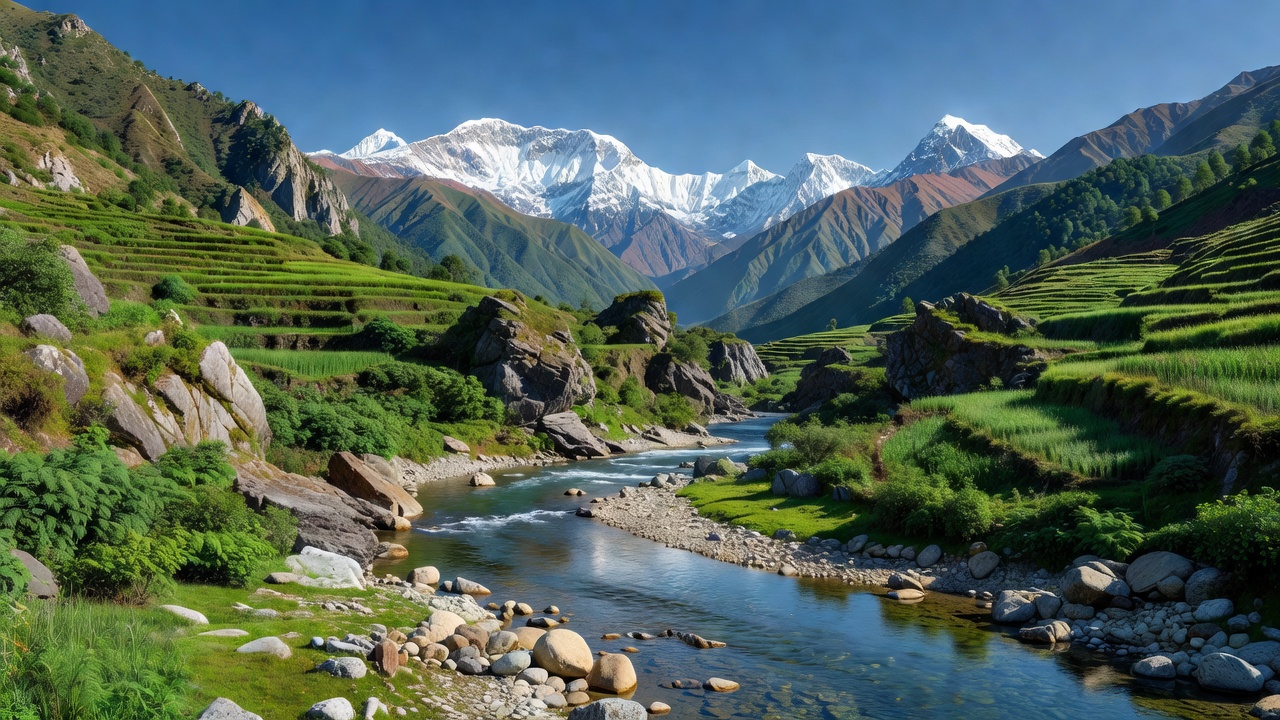
Residents in the town of Galchhi moved to higher ground on a nearby bridge to watch the swollen river rush past, pointing out massive boulders carried downstream during the initial surge. Entire homes, vehicles and farm tractors protruded from thick gray-brown sediment that had buried villages in the worst-affected areas, according to an AP dispatch from the scene. Rice terraces along the riverbanks showed fresh landslide scars where sections of fields had collapsed into the water.
Large concrete bridges and smaller suspension crossings were destroyed in the floods, isolating communities on opposite sides of the river and complicating access for relief efforts. Homes and businesses that avoided total destruction still lacked electricity on Aug. 30, with twisted power poles and lines tangled in the mud. Local resident Govind Shrestha said, «Sometimes they say a flood is coming, then we have to run again to higher ground, even at night. There is also rain. It’s really difficult for me. I have a 72-year-old father and 70-year-old mom. I must carry them and I am exhausted. It’s going on like this for those who are still alive.» Sattan Singh Tamang, 47, who was near a bridge when the floods hit, added, «Those who are there are now stuck there. Those who are here are stuck here. It’s going to be very difficult.»
Nepal’s disaster agency placed the domestic death toll at 734 with 2,498 people missing, while Chinese authorities reported 16 deaths and 546 missing on their side of the border. The combined figures reached 750 dead and over 3,000 missing, incorporating more than 100 Nepalis and citizens from a dozen other countries among those unaccounted for in Tibet. A Reuters report on Aug. 30 noted that the Red Cross estimates more than 90,000 people have been affected by the disaster overall.
The floods were triggered by a collapse or avalanche of ice and rock near the Nepal-Tibet border, sending a massive surge of mud, debris and water down the Lhende, Bhotekoshi and Trishuli rivers, multiple outlets including India Today and The Himalayan Times reported in updates from Aug. 28-30. Rescue operations have focused on hundreds believed trapped in hydropower project tunnels, with Nepal deploying nearly 20,000 security personnel and using helicopters for repeated evacuation and supply sorties. More than 8,000 people have been rescued so far according to NDRRMA updates, though renewed rain and rising river levels have hampered efforts in districts including Rasuwa, Nuwakot, Dhading and Chitwan.
Scientists have linked the growing frequency of such Himalayan events to climate change, which has accelerated glacier melt in the region at rates that have doubled since 2000, an Associated Press assessment of the disaster found. Studies cited in Reuters coverage indicate the Himalayas are warming faster than many other parts of the world, raising the potential for glacial lake outburst floods and similar catastrophes. A separate World Weather Attribution analysis of prior Nepal extreme rainfall events showed human-induced climate change made heavy precipitation about 10 percent more intense and 70 percent more likely in comparable cases.
Добавить комментарий