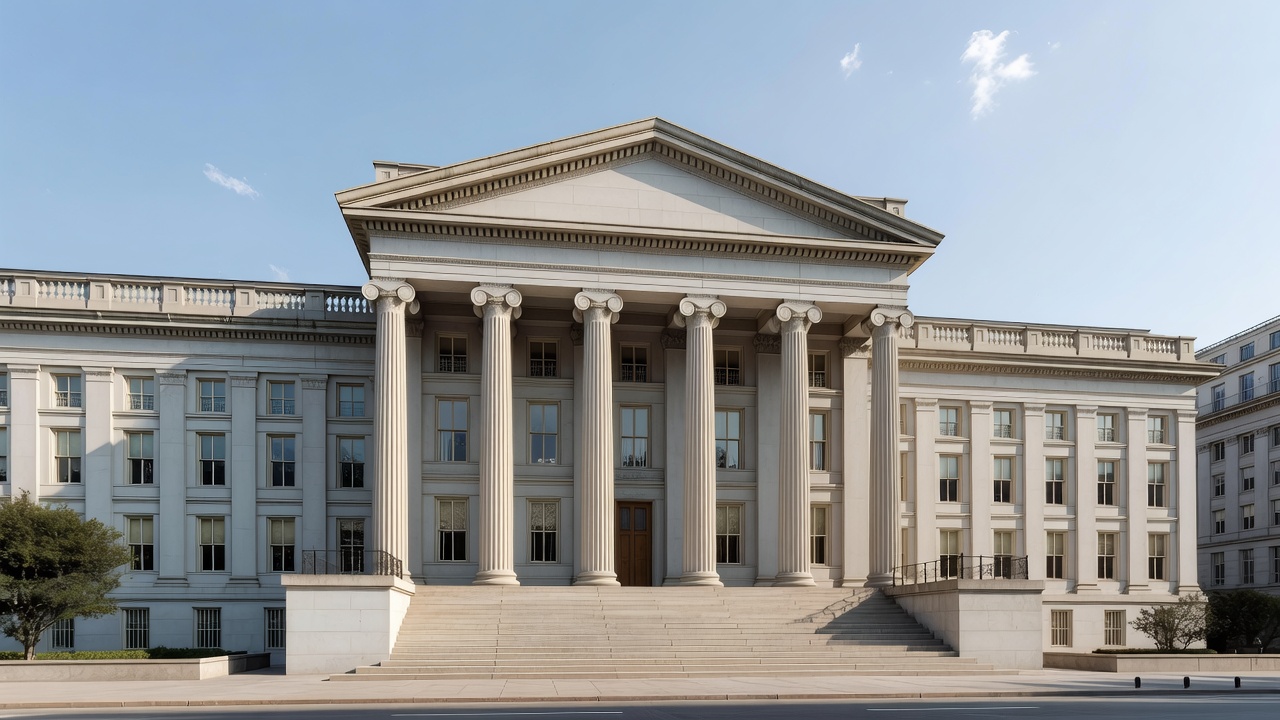
The US Treasury Department indefinitely suspended several general licenses under the Iranian Transactions and Sanctions Regulations, including the authorization for noncommercial personal remittances, an Office of Foreign Assets Control notice published August 24, 2026, stated. This action aligns with changes in US foreign policy toward Iran and its support for regional proxies as well as weapons programs, according to the department. Secretary Scott Bessent announced the measures under the banner of Operation Economic Outcast during a briefing the previous day.
A 30-day wind-down period through September 8 was authorized via General License BB to allow orderly cessation of previously permitted activities, the Federal Register document indicated. Following the deadline, US persons must obtain a specific license from OFAC to conduct any such remittance transfers. The rule prohibits processing by any party other than authorized US financial institutions and bars involvement of the Iranian government.
In remarks from Secretary of the Treasury Scott Bessent on Operation Economic Outcast against Iran, he outlined plans to target every node facilitating Iran’s revenue streams. The campaign includes new sectoral sanctions on digital assets, technology, gold, aviation and shipping, a Treasury press release distributed on August 24 reported. «Our objective is to sever every economic lifeline that sustains this tyrannical regime until Tehran stands alone,» Bessent stated.
The suspended remittance provision had permitted transfers to individuals in Iran provided they were not for business purposes or to blocked persons, according to pre-existing regulations at 31 CFR 560.550. Data from earlier sanctions episodes show significant effects on Iranian household welfare, with a Rethinking Iran report from 2025 documenting a 17.7 percent drop in per capita consumption between 2010 and 2019. Rural poverty rates doubled during that period as export revenues and trade contracted, the economist’s assessment found.
Informal transfer systems have filled gaps left by formal restrictions, the Foundation for Defense of Democracies detailed in a May 2026 analysis. Such hawala networks facilitate hundreds of millions of dollars in annual flows to Iran from the Gulf at low cost and high speed, the think tank reported. These mechanisms operate on trust with minimal documentation, making them resilient to conventional banking sanctions.
The Treasury simultaneously suspended licenses for US persons’ educational activities in third countries, services related to international conferences and certain academic exchanges with Iran, according to the same OFAC announcement. Iran General Licenses F and G, which covered sports and additional educational matters, were also placed under indefinite stay. The suspensions form part of determinations that these authorizations no longer correspond with US policy objectives toward Iran, a Federal Register entry noted.
Добавить комментарий