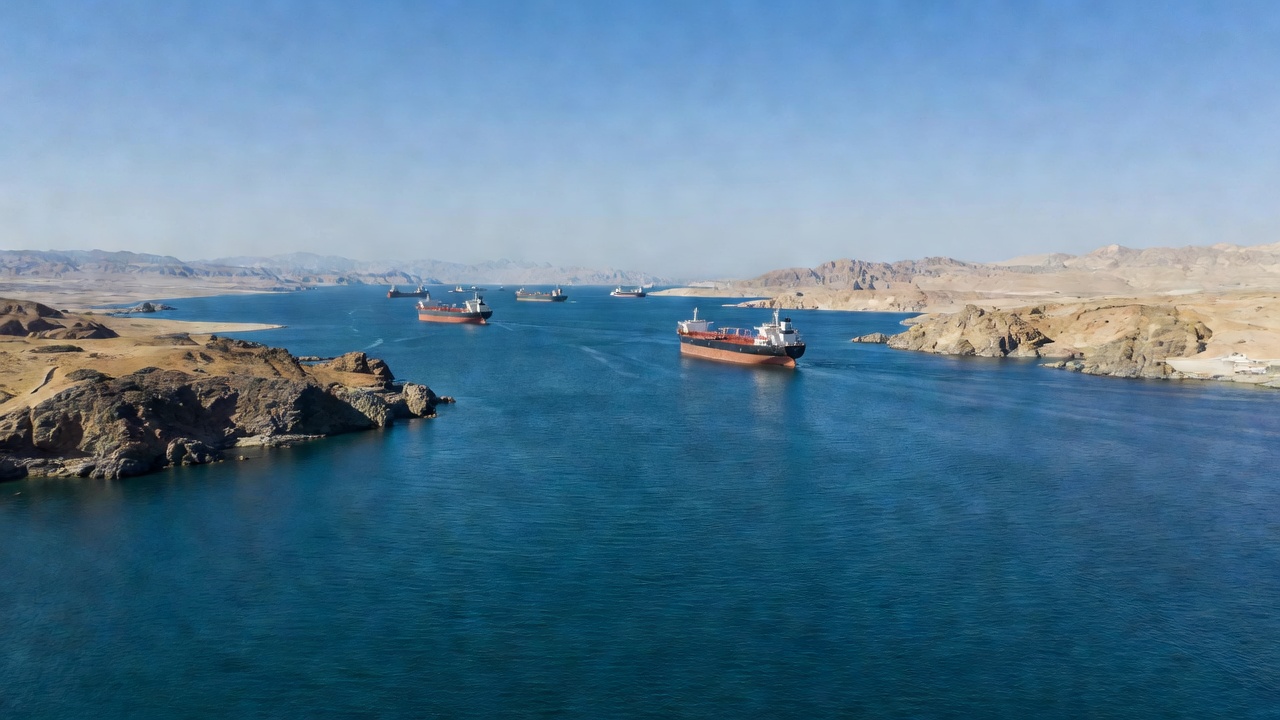
US President Donald Trump told reporters at Joint Base Andrews that the United States maintains total control of the Strait of Hormuz through its navy. «We totally control the Strait of Hormuz. We have control over it. Nobody else, just us,» Trump said according to an Arab Times report. He added that «our Navy is unbelievable and things are going great for our country.» The president reiterated his position by stating «we have total control over the Hormuz Strait right now. They do not have control, we have control, we own it.»
Trump said he does not trust Iran because officials there «lied to me constantly.» The president claimed Iran was «doing just absolutely fine» while describing the country as no longer «the bully of the Middle East.» He added that «at some point they might do something and they get blown away, but right now we are in a very good position,» according to the same report.
The Strait of Hormuz between Iran and Oman ranks among the world’s most critical maritime chokepoints for energy shipments. US Energy Information Administration data places average oil flows through the strait at 20.9 million barrels per day in the first half of 2025, equivalent to roughly 20 percent of global petroleum liquids consumption. The EIA assessment found that volumes had declined from prior years, partly due to OPEC+ production cuts and shifts in export routes.
Regional conflicts in early 2026 triggered a nearly 30 percent drop in oil transit volumes during the first quarter, the US Energy Information Administration reported. EIA figures show flows fell to 14.6 million barrels per day from more than 20 million barrels per day in late 2025 amid the Iran-related disruptions. Britannica’s overview of the 2026 Iran war documented Iranian attacks on vessels and subsequent US strikes aimed at restoring navigation through the passage.
Trump’s comments arrived against a backdrop of efforts to stabilize maritime traffic following cease-fire attempts earlier in the year. Multiple US Central Command updates from July 2026 detailed strikes on Iranian assets used to target commercial shipping in the strait. Those operations formed part of a broader campaign to counter threats to vessels transiting the waterway, according to Pentagon statements.
Uncertainty over the strait’s full reopening has persisted into August despite declarations that it remains open to traffic. The EIA has continued quarterly monitoring of chokepoint flows to track impacts from the conflict on global markets. Asian nations received the majority of crude oil and condensate moving through the strait in recent years, the agency data indicated.
Добавить комментарий