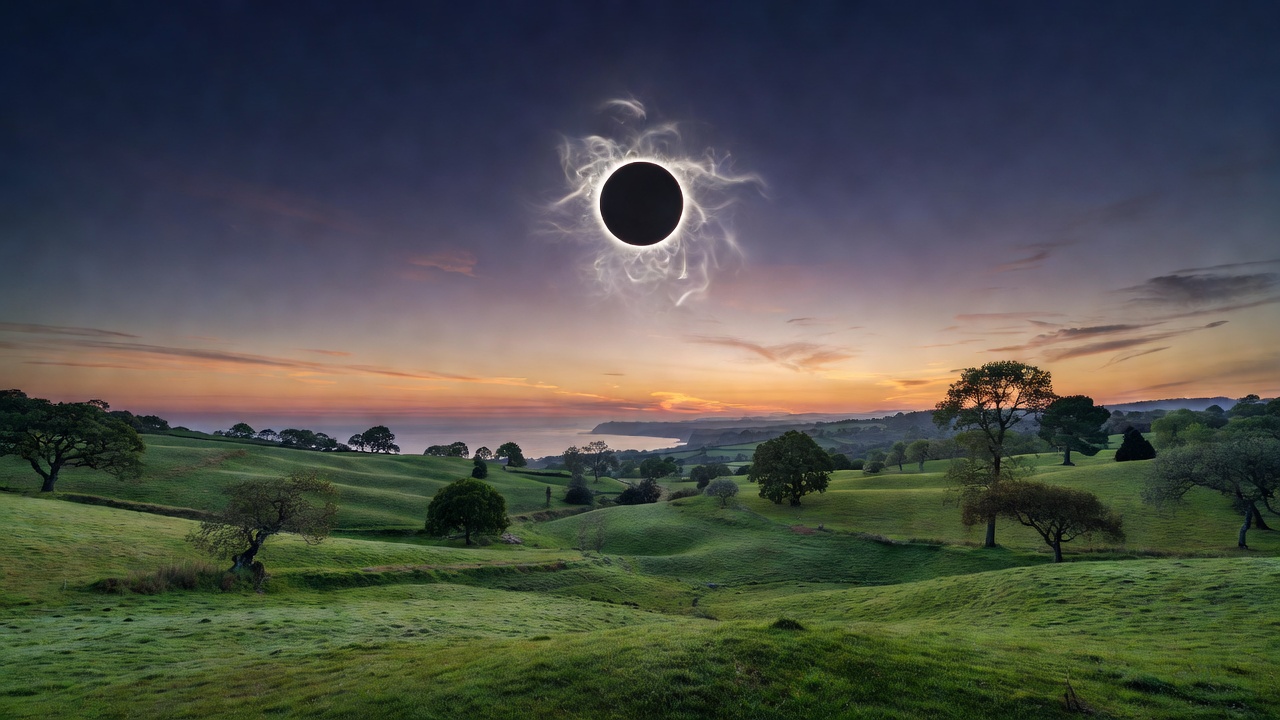
The total solar eclipse on August 12, 2026, will cross northern Spain from the Atlantic to the Mediterranean coast along with slivers of Greenland, Iceland and Portugal, according to the European Space Agency, offering some of mainland Europe’s best viewing opportunities in a path that includes cities such as A Coruña, Bilbao, Zaragoza, Valencia and Palma. Totality will last up to two minutes and 18 seconds at its maximum near Iceland but between one and two minutes across Spanish locations, ESA data show, with the event beginning around sunset as the sun, moon and Earth align. Spanish authorities estimated the celestial event could attract at least an additional 500,000 visitors to sparsely populated interior areas often called Empty Spain, prompting a major public safety operation that combines astronomy outreach with wildfire vigilance.
Spain’s Interior Ministry set up 350 official viewing sites while limiting or restricting access to another 123 locations due to environmental conditions or potential evacuation obstacles in case of fire, the ministry reported. Interior Minister Fernando Grande-Marlaska stated, «High temperatures, the accumulated dryness of vegetation, and the intense pressure on natural areas due to projected travel necessitate extreme preventive measures.» The ministry’s campaign urged visitors to avoid lighting fires, littering or parking near dry vegetation as officials sought to prevent any spark from igniting new blazes during the influx.
More than 33,500 law enforcement officers were deployed to observation areas and access points to enforce the restrictions and support safe viewing, according to the Interior Ministry. The measures arrive only weeks after the most destructive wildfire in Spanish history forced the evacuation of tens of thousands and several smaller fires remained active in other parts of the country. World Weather Attribution scientists determined that climate change made the fire-prone conditions at least 20 times more likely in central Spain during the July outbreak.
The July 2026 wildfires burned around 140,000 hectares across central and eastern Spain, with the Ávila fire alone consuming 44,000 hectares and ranking as the largest on record, a World Weather Attribution assessment found. Those blazes displaced more than 80,000 people and led to nearly 100,000 others being advised to stay indoors because of poor air quality, the group reported. The fires followed an unusually wet January that boosted vegetation growth followed by record summer heat and drought that dried fuels to highly flammable levels.
Much of Spain remained on alert for temperatures climbing above 35 degrees Celsius with bone-dry vegetation, the national weather agency AEMET forecast across northwest to southeastern areas that overlap many eclipse viewing zones. AEMET data placed this summer as the hottest on record in Spain, exacerbating the fire risk after the earlier blazes. The combination of extreme heat, drought and high fuel loads has become more common as Europe warms faster than the global average, according to climate analyses.
Specialized eclipse glasses certified to ISO 12312-2 standards are required for safe viewing even when only a sliver of the sun remains visible, Telmo Fernández Castro, director of the Madrid Planetarium, said. «To look at the sun, you must always use proper protection, and the most suitable protection is eclipse glasses,» Fernández Castro stated. The glasses employ special filters to block harmful solar radiation that can damage eyes without immediate sensation of pain, while authorities also advised against using cameras, binoculars or telescopes without proper solar filters during partial phases.
Добавить комментарий