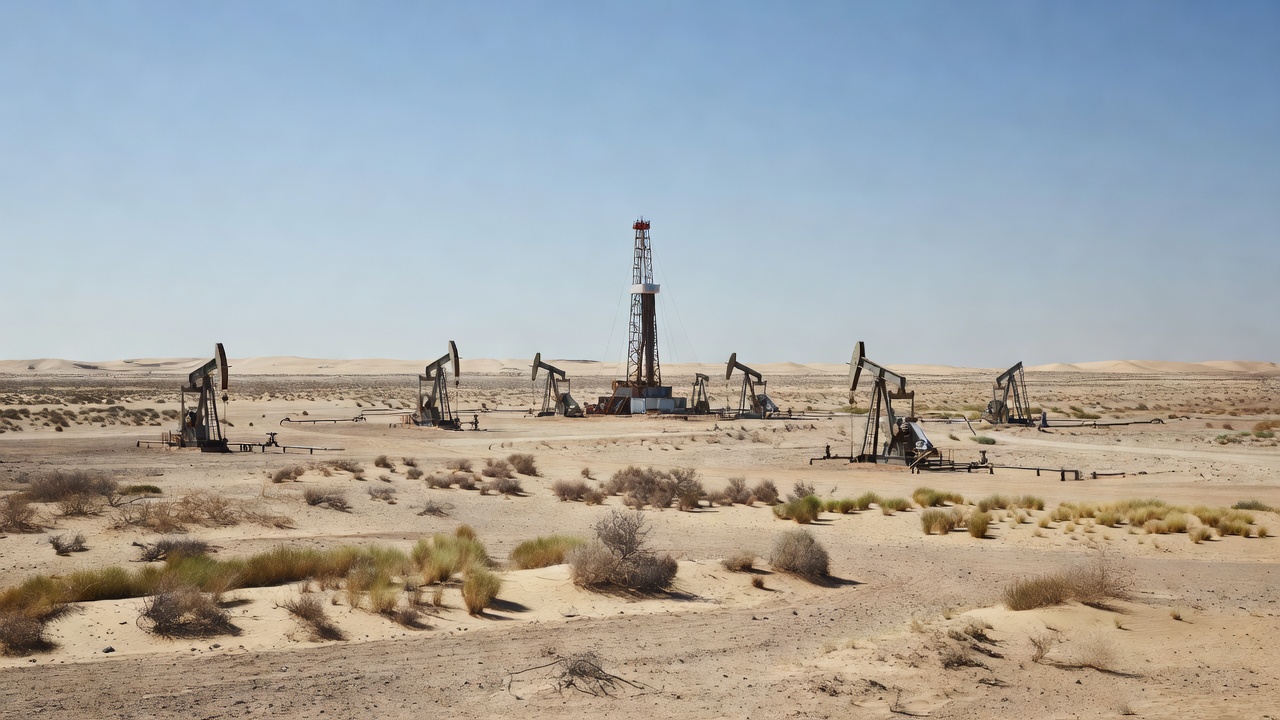
Arab Times reported on July 31 that Kuwait Oil Company recently wrapped up the initial phase of its unconventional Jurassic reservoirs project. The effort centered on the successful drilling of the SA1029 exploratory oil well in the Sabriya field of North Kuwait. Sources who spoke to the newspaper said the work established that hydrocarbons could be produced from the kerogen reservoir, identified as the main origin of oil and gas found in deeper Jurassic formations. The sources added that the outcome validated the economic case for continued investment in such exploration activities across the country.
The Sabriya field counts among the largest in North Kuwait, a designation that underscores its strategic role in national output, according to the same sources. This latest step marks an advance beyond dependence on conventional reservoirs toward more complex deep formations that demand specialized methods. Those techniques encompass multi-stage hydraulic fracturing together with extended horizontal drilling, the sources explained in their briefing to the publication.
Kuwait Oil Company’s history in the area includes the 2005 discovery of premium light crude in the Sabriya field, an event the company itself documented as a major leap in its exploration capabilities. That find involved API 52-grade oil, which set the stage for later Jurassic work. An inauguration ceremony for an earlier Jurassic oil and gas production facility in Sabriya took place in 2018 under Kuwait Petroleum Corporation oversight, with initial projections for 500 million cubic feet per day of free gas output, the company stated at the time.
Baker Institute data from March 2026 places Kuwait’s non-associated gas production from northern Jurassic fields at just under 700 million cubic feet per day as of 2025, with forecasts for 720 million cubic feet daily in 2026 and an eventual peak of 900 million. The institute noted that the country expanded Jurassic production by 110 billion cubic feet in 2024 as part of efforts to meet domestic demand that reached 2.4 billion cubic feet per day the same year. Such figures highlight the growing contribution of these resources amid broader targets to lift total oil capacity to 4 million barrels per day by 2035.
A Legal 500 country guide on Kuwait energy published in 2026 recorded national natural gas output hitting a record 2.07 billion cubic feet per day during 2025, with unconventional and Jurassic developments forming a key component. The guide pointed to the Mutriba field in Northwest Kuwait entering commercial production in June 2025 as another milestone in handling geologically complex reservoirs spanning more than 230 square kilometers. Kuwait Oil Company continues to pursue similar projects to secure long-term supplies of free gas and high-value light oil, the sources told Arab Times.
Mordor Intelligence projected the Kuwait oil and gas market to expand from $32.39 billion in 2026 to $40.83 billion by 2031 at a compound annual growth rate of 4.74 percent, driven in part by upstream investments in tight reservoirs. The consultancy highlighted that North Kuwait fields, including Sabriya, contributed 400,000 to 500,000 barrels per day in 2025 while requiring annual infill drilling to counter natural decline rates of 4 to 6 percent. These dynamics align with the strategic push described by sources for completing remaining phases of the Jurassic initiative.
Добавить комментарий