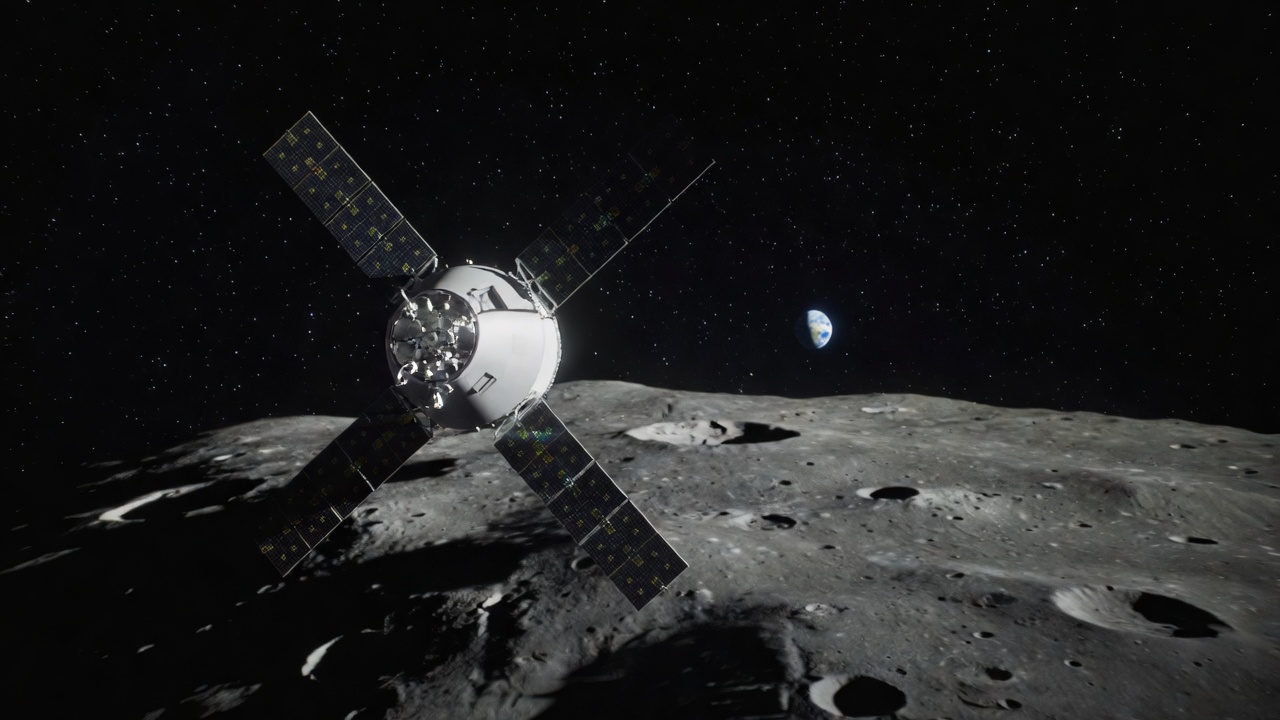
President Donald Trump presented the Congressional Space Medal of Honor to NASA astronauts Reid Wiseman, Victor Glover and Christina Koch along with Canadian Space Agency astronaut Jeremy Hansen during a ceremony on August 28, 2026, at Johnson Space Center in Houston, where NASA Administrator Jared Isaacman and other dignitaries joined the event that also featured the unveiling of plans for a new US Space Academy. The award, the nation’s highest honor for spaceflight, recognized the crew’s successful Artemis II mission that marked humanity’s return to lunar distance after more than 50 years. According to a NASA release, Trump described the recipients as «four intrepid space heroes» whose mission had broken records while testing the Orion spacecraft.
NASA figures show the Artemis II crew launched aboard the Space Launch System rocket on April 1, 2026, from Kennedy Space Center in Florida and splashed down in the Pacific Ocean on April 10 after traveling a record 252,756 miles from Earth, surpassing the Apollo 13 mark of 248,655 miles set in 1970.[[1]](https://www.nasa.gov/news-release/president-honors-nasas-artemis-ii-crew-with-highest-us-space-award/) The astronauts flew a total of 695,081 miles during the 10-day test of the Orion capsule named Integrity, which brought them within 4,067 miles of the lunar surface. A NASA assessment found the mission included several historic firsts, among them the first woman, first African American and first non-American to travel beyond low Earth orbit.
The crew’s achievement sets the stage for Artemis III, a low Earth orbit demonstration of human landing systems scheduled for 2027, according to NASA program updates that also target Artemis IV for the first crewed lunar landing near the south pole by 2028.[[2]](https://news.usni.org/2026/06/26/report-to-congress-on-returning-humans-to-the-moon) Trump used the Houston event to announce the creation of a US Space Academy serving the Space Force, NASA and commercial partners, stating that its location had yet to be determined. «Space is the hot thing,» the president told the crowd, while adding that Americans would return to the lunar surface before the end of his term with Mars missions to follow shortly thereafter.
NASA data places the total number of Congressional Space Medal of Honor recipients at 34 following the Artemis II presentation, with many prior awards granted posthumously to crews from Apollo 1, Challenger and Columbia.[[3]](https://www.nasa.gov/image-article/nasas-artemis-ii-crew-receives-congressional-space-medal-of-honor/) Neil Armstrong received the first medal after his Apollo 11 moon landing, and President Jimmy Carter awarded six in 1978 to figures including Alan Shepard, John Glenn and Frank Borman. The most recent recipients before the current crew were Doug Hurley and Bob Behnken in 2023 for the first commercial crew launch to the International Space Station, NASA reported.
In remarks at the ceremony, Isaacman stated, «There are no finer humans we could have sent as our ambassadors to the stars.» Wiseman, the mission commander, told NASA that it was the honor of his lifetime to fly with Glover, Koch and Hansen, underscoring the contributions of the entire Artemis team. The medal, authorized by Congress in 1969, recognizes exceptionally meritorious efforts that contribute to the welfare of the nation and humanity, according to NASA descriptions of the award criteria.
Trump pointed out that the astronauts did not accomplish the feat alone and thanked all those who supported the Artemis II mission from development through recovery operations by the US Navy and Coast Guard. A Senate resolution introduced after the April mission by Senators Maria Cantwell and Ted Cruz commended the crew for surpassing deep space distance records while achieving multiple firsts in exploration.[[4]](https://www.commerce.senate.gov/press/dem/release/cantwell-cruz-introduce-resolution-honoring-the-exceptional-success-of-the-artemis-ii-mission/) The honor arrives as NASA advances hardware for Artemis III and IV, including core stage construction for the Space Launch System and integration of Orion modules, according to agency progress reports.
Добавить комментарий