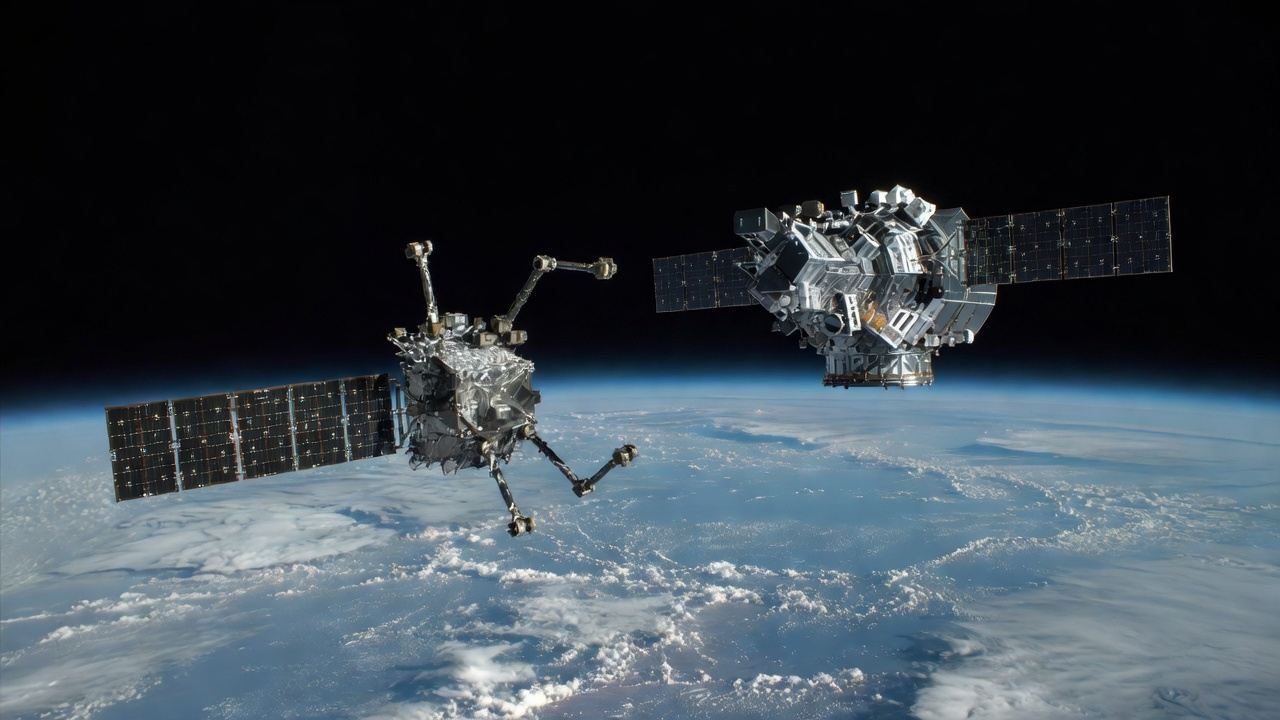
Katalyst Space Technologies said its Link spacecraft closed to within nine miles of the Swift Observatory using onboard sensors more than a week after the formal rescue was abandoned. The company decided to continue the rendezvous for practice and to collect information on the telescope for NASA despite earlier difficulties controlling the craft. «We got so close, but so far,» Katalyst CEO Ghonhee Lee told The Associated Press. The approach allowed Link to snap photos before low fuel levels required it to withdraw from the vicinity.
The rescue mission was canceled in mid-August after Link entered an uncontrollable spin several weeks after its launch aboard a Pegasus XL rocket in early July. NASA and Katalyst jointly announced that the three-armed salvager would not attempt to capture or boost the observatory into a higher orbit. This leaves the telescope on course for a fiery atmospheric reentry sometime between October and the end of the year.
NASA paid the startup $30 million for the operation after determining that intense solar activity had accelerated the decay of Swift’s orbit. The observatory was orbiting at 214 miles as of late August according to Katalyst updates. Officials had hoped to raise it back to its original altitude of 373 miles which would have enabled years of additional observations.
Launched in 2004 the Neil Gehrels Swift Observatory has spent more than two decades detecting gamma-ray bursts exploding stars and other high-energy cosmic events according to NASA records. A World Bank report on space-based research infrastructure notes that such observatories provide critical data for international scientific collaboration with Swift contributing to over 1,500 burst detections. The telescope’s specialized instruments for gamma rays X-rays and ultraviolet light have advanced understanding of the universe’s most violent phenomena.
Link features three robotic arms each equipped with pinching grippers designed to grasp the 1.6-ton observatory which was never built for in-orbit servicing. The spacecraft measures roughly the size of a small refrigerator with a 40-foot solar array. Although the capture phase was scrapped the close approach served as a valuable test for Katalyst’s future satellite maintenance projects.
NASA has indicated that lessons from this effort could support potential future rescues including one for the Hubble Space Telescope which faces similar orbital decay from heightened solar activity. Katalyst has suggested its next-generation spacecraft might be capable of assisting Hubble in the coming years. Swift’s pending reentry highlights the growing challenges of managing aging assets in low-Earth orbit amid increasing solar influences.
Добавить комментарий