
тест
Блог
-

Iranian Strikes Hit UAE and Oman as US Seeks to Reopen Hormuz Strait
Iranian strikes targeted the United Arab Emirates and Oman on Monday as the United States attempted to reopen the Strait of Hormuz using naval assets under President Donald Trump’s Project Freedom initiative. The moves provoked the biggest escalation since a ceasefire was declared four weeks ago. Attacks included a fire at the Fujairah oil port and injuries in both Gulf states.
The United Arab Emirates reported that Iranian drones struck an empty ADNOC tanker attempting to cross the Strait of Hormuz. Air defense systems engaged 12 ballistic missiles, three cruise missiles and four drones fired from Iran. A large fire broke out at the Fujairah oil port, injuring three Indian nationals. Emirati officials described the assaults as a serious escalation and ordered schools to shift to remote learning for the remainder of the week.
In Oman, a residential building for company employees in the Tibat area of Bukha along the Strait of Hormuz coastline was hit. The strike injured two expatriate workers with moderate wounds, damaged four vehicles and shattered glass in a nearby house. The Oman News Agency reported the details without assigning responsibility for the attack near Emirati territory. This incident extended the reach of violence beyond the maritime channel itself.
Kuwait strongly condemned the Iranian drone attack on the UAE tanker. The foreign ministry called it a direct threat to maritime security and international shipping routes while expressing full support for the UAE’s right to protect its security and interests. It warned that targeting commercial vessels violates international law and freedom of navigation, risking broader instability across regional and global supply lines.
The US military said it destroyed seven Iranian fast boats that were threatening civilian shipping in the strait. Trump announced the mission on social media, stating the US would guide ships safely through the restricted waterways so they could freely conduct business. Admiral Brad Cooper strongly advised Iranian forces to avoid US military assets involved in the operation. A US-flagged Maersk vessel successfully transited the strait under naval protection without incident.
Iran fired warning shots at a US warship approaching the area and released a map claiming expanded control over waters reaching UAE coastlines. Iranian authorities denied any successful merchant ship crossings had occurred and warned that foreign armed forces entering the strait would face attacks. Officials maintained that security of the Strait of Hormuz rests with Iran and requires coordination with its armed forces for safe passage.
The Strait of Hormuz carries about one fifth of global oil and liquefied natural gas. It has remained largely blocked since air strikes on Iran in February, stranding thousands of seafarers and vessels. Oil prices climbed above 115 dollars per barrel following the latest violence. Several regional states and European leaders urged de-escalation and a return to negotiations to restore safe navigation.
Sources:
— https://kuwaittimes.com/article/43232/kuwait/other-news/iran-hits-uae-oman-as-hormuz-simmers/
— https://www.bbc.com/news/articles/cjwp432d0v5o
— https://www.nytimes.com/live/2026/05/04/world/iran-hormuz-ships-navy
— https://www.npr.org/2026/05/04/nx-s1-5810508/iran-war-updates -

Kuwait Residency Department Instructed to Accept Expired Passports with Embassy Extensions
Brigadier General Farid Al-Mutairi has issued a circular directing departments under the General Department of Residency Affairs to accept expired passports for residency transactions if they carry official embassy extensions. The humanitarian measure responds to the current situation in Kuwait and the surrounding region by enabling residents unable to renew their passports to complete necessary procedures without interruption. Applicants will need to present both a stamped extension in their passport and a supporting letter from their embassy authenticated by the Ministry of Foreign Affairs.
The circular makes clear that these documents suffice for processing when residents have been unable to obtain new passports. It states, «Given the current situation in the country and the region, and to ensure the smooth operation of services and facilitate procedures for applicants, it has been decided to accept residents whose passports have expired and who were unable to renew them, but have had them extended, and to process their transactions using these passports.» All staff members are instructed to implement the policy uniformly across residency offices.
This requirement for embassy authentication through the Ministry of Foreign Affairs ensures that only valid extensions are accepted for official use. The policy covers key residency procedures that include permit renewals and updates to associated records. By adopting this approach, the authorities aim to reduce obstacles for the expatriate population navigating administrative requirements.
Employees throughout the residency affairs system have received clear orders to follow the circular without any deviations. The directive, issued April 15, emphasizes adherence to maintain consistency in how cases are handled. Such instructions help standardize operations during periods when external factors complicate standard documentation renewal.
Kuwait has introduced broader immigration reforms designed to simplify processes and decrease repeated visits to immigration offices for long-term residents. The current circular complements these changes by offering flexibility on passport validity for those with proper embassy verification. These steps collectively contribute to more efficient management of residency affairs.
The decision prevents potential interruptions in legal residency status for individuals affected by regional circumstances. It maintains the integrity of the system through mandatory documentation while prioritizing service continuity. Authorities expect the policy to ease the burden on both applicants and administrative staff handling high volumes of transactions.
Sources:
• https://www.arabtimesonline.com/news/residence-dept-asked-to-accept-expired-passports/
• https://timeskuwait.com/residency-affairs-eases-rules-permits-transactions-with-embassy-extended-passports/
• https://blog.wego.com/kuwait-accepts-extended-expired-passports-for-residency-procedures/ -

Private Crowd Testing Ensures a Robust Mobile Banking Experience
A leading financial institution deployed private crowd testing to ensure a robust mobile banking experience ahead of its app launch. The program engaged employees from various departments who tested the platform under real-world conditions on multiple Android and iOS devices. This resulted in the identification of approximately 300 issues and a 75 percent improvement in app stability and usability.
The testing addressed key challenges in validating performance, usability and reliability across platforms without risking customer data exposure. By involving staff from different departments, the bank gathered insights drawn from genuine user perspectives on transaction processing and interface design. Feedback collected enabled iterative improvements that refined the app based on practical, day-to-day banking interactions.
Specific defects resolved during the program included application crashes under certain conditions, operating system functionality gaps, data synchronization errors and localization challenges linked to device settings. These problems were systematically documented and fixed through repeated testing cycles that promoted rapid remediation. The expanded testing scope delivered 75 percent wider device coverage, confirming the app would perform consistently for users regardless of their hardware choices.
Project results also encompassed faster release cycles facilitated by the ongoing feedback mechanisms. Developers received timely input that allowed for swift validation of corrections and performance enhancements. This contributed to increased confidence in the app’s readiness for customer use and aligned with the institution’s digital transformation priorities.
Private crowd testing provided the institution with the advantages of broad participation and real-world validation while upholding the strict confidentiality required in banking. Unlike public crowd testing, the internal approach limited access to trusted employees familiar with the bank’s services and customer needs. The strategy proved effective in bridging gaps that conventional testing might overlook in a complex financial application.
The initiative focused on core functions such as diverse payment types, bill settlements and account management features to guarantee accuracy and ease of use. By eliminating identified usability and integration issues prior to launch, the bank positioned its mobile platform for positive customer reception. The experience demonstrates the practical value of leveraging internal crowds for high-quality assurance in digital financial services.
Sources:
— https://www.qualitestgroup.com/insights/case-study/internal-crowd-testing-ensures-a-robust-mobile-banking-experience/
— https://www.linkedin.com/posts/qualitest_private-crowd-testing-a-fintech-success-activity-7427234601812586496-7dJ8
— https://ubertesters.com/blog/crowd-testing-your-fintech-app-what-to-test-at-each-stage-and-the-risks-of-skipping-it/ -

Continuous Testing Essential for S/4HANA Project Success
Continuous testing integrated into the development lifecycle plays a vital role in S/4HANA projects. It enables organizations to move beyond static checklists and identify defects at early stages of implementation. This methodology reduces risks, accelerates deployments and supports the complex requirements of modern enterprise resource planning transformations.
The transition to S/4HANA involves substantial changes to data structures, business processes and user interfaces. Companies seek to capitalize on real-time processing capabilities and embedded analytics that the platform provides. Thorough validation throughout the project ensures these features deliver intended benefits without introducing new operational vulnerabilities.
Traditional testing methods that depend on manual checklists and phase-gate approvals often uncover problems only after significant investment has already been made. Such an approach leads to higher remediation expenses and potential schedule overruns in large-scale ERP initiatives. Continuous testing embeds automated checks at multiple points in the pipeline to provide ongoing assurance of system integrity.
Automation technologies allow test suites to run automatically with each modification to the system configuration or custom code. Integration into CI/CD workflows facilitates rapid feedback loops for developers and testers alike. The result includes improved code quality, fewer production incidents and more predictable project outcomes.
Benefits of this practice extend to cost savings through early defect detection and reduced reliance on manual testing resources. Cross-functional teams experience better collaboration when quality assurance becomes a shared responsibility from the project’s outset. Organizations report enhanced ability to maintain compliance and performance standards during and after the migration.
With the deadline for SAP ECC maintenance support drawing closer, enterprises face increased pressure to complete their S/4HANA journeys successfully. Comprehensive testing strategies have proven instrumental in mitigating the risks associated with data conversion and process harmonization. Continuous approaches help maintain business continuity while enabling innovation in core operations.
Advanced solutions incorporate model-based testing to adapt to frequent system updates. These tools analyze change impacts and prioritize test execution for maximum coverage with minimal effort. Project teams gain real-time visibility into quality metrics that inform decision-making at every stage.
Sources:
— https://www.qualitestgroup.com/insights/blog/continuous-testing-in-s4hana-projects/
— https://www.tricentis.com/blog/continuous-delivery-in-s4hana-with-shift-left-testing
— https://www.panaya.com/blog/testing/continuous-testing-for-constant-quality/
— https://www.andagon.com/en/blog/sap-s4hana-migration-testing-avoid-failure -

Clone of Clone of Dubai Leads Gulf Stocks Higher on Hopes of Iran Conflict De-escalation
Gulf stock markets ended higher on Wednesday with Dubai in the lead as hopes mounted for a de-escalation in the conflict involving Iran. U.S. President Donald Trump said Washington could terminate its military campaign in two to three weeks and that no agreement with Tehran was required to stop the fighting. Dubai’s main index climbed 2 percent after the emirate’s 1 billion dirham economic support package took effect, providing relief to the business community for the next three to six months.
Shares of Emaar Properties surged 5.6 percent to lead the blue-chip gains in the emirate while Emirates NBD rose 4.7 percent. The support measures had been announced by the crown prince via social media on the prior Monday. These steps are seen as critical in helping local firms navigate the uncertainties arising from the month-long regional conflict.
Milad Azar, a market analyst at XTB MENA, said, «If these expectations are realized, the recovery could become more sustained over the medium term.» He added, «Support from the Dubai government’s new package could ease economic pressures and support growth, providing further boost to the market.» Azar further noted, «Additionally, the UAE continues to benefit from resilient fundamentals.»
Other Gulf indices also posted gains with Abu Dhabi’s benchmark up 1.4 percent and Aldar Properties closing 0.9 percent higher. Qatar’s main index rose 0.8 percent supported by a 3.9 percent advance in Industries Qatar while Saudi Arabia’s benchmark added 0.2 percent with Saudi National Bank and Saudi Aramco among the advancers. These movements occurred even as an Iranian cruise missile struck an oil tanker leased by QatarEnergy in Qatari waters demonstrating that risks remain elevated.
Oil prices reversed some of their earlier gains on the day as uncertainty continued to weigh on energy markets. The Saudi market has stabilized after a steady recovery this month with still elevated oil prices continuing to support sentiment. Such dynamics highlight the interconnected nature of geopolitics and financial markets in the region.
However subsequent trading sessions showed the volatile nature of the situation as fears of further escalation in the Iran war led to mixed results in UAE equities by April 3. Dubai’s index fell 0.5 percent at that time with Emaar Properties and its development arm each declining 4.9 percent. This reversal illustrated how quickly market sentiment can shift amid evolving developments in the Middle East conflict.
Egypt’s blue-chip index meanwhile leapt more than 3 percent with Commercial International Bank gaining 3.1 percent as positive momentum spread to other regional bourses. The broader equity response reflected investor efforts to price in both the potential for peace and the persistent threats from the ongoing war. Additional context from the period shows how such events can influence investment flows across multiple asset classes.
Sources:
— https://www.reuters.com/world/middle-east/dubai-leads-gulf-stocks-higher-hopes-de-escalation-iran-war-2026-04-01/
— https://www.zawya.com/en/capital-markets/equities/mideast-stocks-dubai-leads-gulf-stocks-higher-on-hopes-of-de-escalation-of-iran-war-jnm8m8pi
— https://www.brecorder.com/news/40414287 -

Kuwait Emir Dissolves Parliament Citing Corruption in State Institutions
Kuwait’s Emir Sheikh Mishal al-Ahmad al-Sabah dissolved parliament on Friday and suspended key constitutional articles for no more than four years. He and the cabinet will assume the National Assembly’s duties as the country addresses political deadlock and corruption in state institutions. The move follows April elections, the first under the emir who took office in December 2023.
The emir stated in his televised address that «The unhealthy atmosphere experienced by Kuwait in previous years has encouraged the spread of corruption to reach most state facilities, and unfortunately it reached the security and economic institutions,» adding that «it has even affected the justice system.» «We have faced difficulties and obstacles that cannot be tolerated,» Sheikh Mishal said. He said the failure to form a government was the result of «the dictates and conditions of some» legislators. «Kuwait has been through some hard times lately … which leaves no room for hesitation or delay in making the difficult decision to save the country and secure its highest interests,» he added.
The April elections returned a parliament that quickly encountered difficulties in cooperating with the executive on cabinet formation. Several lawmakers had refused to participate in the government, leading to the impasse. Sheikh Mishal, who succeeded Sheikh Nawaf al-Ahmad al-Jaber al-Sabah last December, had previously dissolved the prior assembly in February citing constitutional violations. These events underscore the recurring challenges in Kuwait’s unique semi-democratic system.
Disputes between the elected National Assembly and the government-appointed cabinet have triggered multiple parliamentary dissolutions throughout Kuwait’s history. The assembly possesses greater powers than comparable institutions in other Gulf Cooperation Council states, often resulting in policy paralysis. No parliament has completed a full term since 2016, with earlier full suspensions taking place in 1976 and 1986. This pattern has impeded critical reforms aimed at diversifying the economy beyond oil.
Repeated political instability has curtailed investment and stalled projects designed to modernize infrastructure and reduce oil dependency. Kuwait has lagged behind neighboring countries in implementing vision programs for economic transformation due to the persistent gridlock. The current suspension grants the emir and cabinet full authority to enact legislation during the interim period. Such measures are intended to facilitate the advancement of national development priorities.
Over the four-year period, authorities will conduct a comprehensive study of the democratic experience to address its shortcomings. The emir stressed that the difficult decision was essential to save the country and secure its highest interests amid hard times. Following the dissolution, a new government was formed headed by Ahmad Abdullah al-Sabah to support the reform agenda. This has paved the way for progress on previously delayed initiatives in energy and economic diversification.
Sources:
— https://www.aljazeera.com/news/2024/5/11/political-turmoil-in-kuwait-as-emir-dissolves-parliament
— https://www.reuters.com/world/middle-east/kuwaits-emir-dissolves-parliament-suspends-some-constitution-articles-2024-05-10/
— https://apnews.com/article/kuwait-politics-emir-meshal-parliament-95dc1a5ad790505803f26a2e4a96a786 -

Kuwait Sets 9:00 AM to 1:15 PM Schedule for Online Secondary Classes
The Ministry of Education has revised the hours for distance learning for secondary students, setting the school day from 9:00 a.m. to 1:15 p.m. The new schedule includes six periods of 35 minutes each with educational content distributed to fit the timeframe. Acting Undersecretary Engineer Muhammad Al-Khalidi issued the decision on April 16, 2026, which applies to public schools, special education institutions, religious education institutes and private schools and takes effect immediately.
The revision is intended to better organize the educational process and align it with current developments. It aims to ensure continuity in academic learning while taking into account prevailing circumstances. The ministry has called on all relevant authorities to adhere strictly to the new schedule to maintain educational quality. Schools must adjust their daily routines accordingly to meet the requirements of the updated directive.
Secondary level distance learning will now follow this uniform timetable across different institution types. Public and private schools will operate under the same hours for online classes. Special education and religious education programs are likewise bound by the 9:00 a.m. to 1:15 p.m. window.
The six 35-minute periods replace previous configurations for e-learning at the secondary stage. This structure supports focused instruction in each session. Curriculum distribution has been planned to cover key topics within the allotted time.
The decision remains in force until the ministry issues a new update. Officials have emphasized the need for full compliance from all parties involved. This includes teachers, students and school administrations in the specified categories of institutions.
Implementation of the schedule is part of ongoing regulation of the education sector during periods of distance learning. The adjusted hours provide a defined structure for the school day. Coordination between the ministry and schools will facilitate a smooth transition to the new timings.
Sources:
— https://www.arabtimesonline.com/news/kuwait-sets-900-am-to-115-pm-schedule-for-online-secondary-classes/
— https://timeskuwait.com/ministry-of-education-revises-school-hours-for-distance-learning/
— https://www.facebook.com/kuwaittimesdaily/posts/kuwaits-education-ministry-announced-changes-to-the-online-class-timings-for-hig/1399257242248007/ -

Two Women Report Frightening Ordeal on Riyadh to Kuwait Car Journey
Two women traveling from Riyadh to Kuwait via a hired driver and rental company encountered a frightening ordeal after crossing the border on April 17. The driver demanded payment despite an advance transfer of 250 Kuwaiti dinars to the firm and threatened to return them to Saudi Arabia, while diverting the vehicle into isolated desert areas near oil refinery zones in southern Kuwait. The passengers shared their live locations with friends and pressed to visit a police station as they feared for their safety until the driver took them to the company owner’s residence in Shuwaikh.
The women had booked the service through a company recommended by an embassy in Kuwait that initially reassured them with polite representatives and advance driver details. The assigned driver contacted them via WhatsApp the night before departure with questions already settled through the company. Early parts of the trip passed without incident as the driver remained conversational and even offered food along the way.
The atmosphere shifted abruptly after entry into Kuwait when the driver insisted on direct payment and stated he held no employment with the rental company. He had instead accepted the job through a separate ride dispatch platform creating immediate confusion inside the vehicle. Reliance on translation applications became necessary due to language barriers yet these tools failed completely after the border when internet service dropped.
The driver warned that he would turn the car around for the full return to Riyadh unless compensated on the spot. He then left the highway for desolate desert roads close to southern oil facilities heightening the sense of isolation. The women repeatedly requested a police station visit while maintaining continuous contact with friends through shared location data.
Attempts to reach the rental company met with silence as calls went unanswered and messages ignored for some time. The owner responded only after the women issued a final warning that they would report the incident to police. A heated argument in Arabic between the owner and driver then unfolded inside the car amplifying the passengers’ anxiety since they could not understand the exchange.
Instead of heading straight to authorities the driver proceeded first to the company owner’s home in Shuwaikh to settle his payment. The owner appeared dismissive upon arrival claiming he had been asleep despite the mid-afternoon timing. He handed 165 Kuwaiti dinars to the driver in front of the women before they could finally leave the location.
The driver called the women afterward to complain that he received less than the full prepaid sum. «It felt like we were no longer in control of where we were going» one of them later recounted. Friends who tracked their location met them at the residence to ensure their well-being.
Sources:
— https://www.arabtimesonline.com/news/nightmare-on-the-road-riyadhkuwait-journey-leaves-two-women-terrified/
— https://x.com/arabtimeskuwait/status/2045043051261829356
— https://248am.com/mark/information/kuwait-to-saudi-and-bahrain-by-car-everything-you-need-to-know/ -
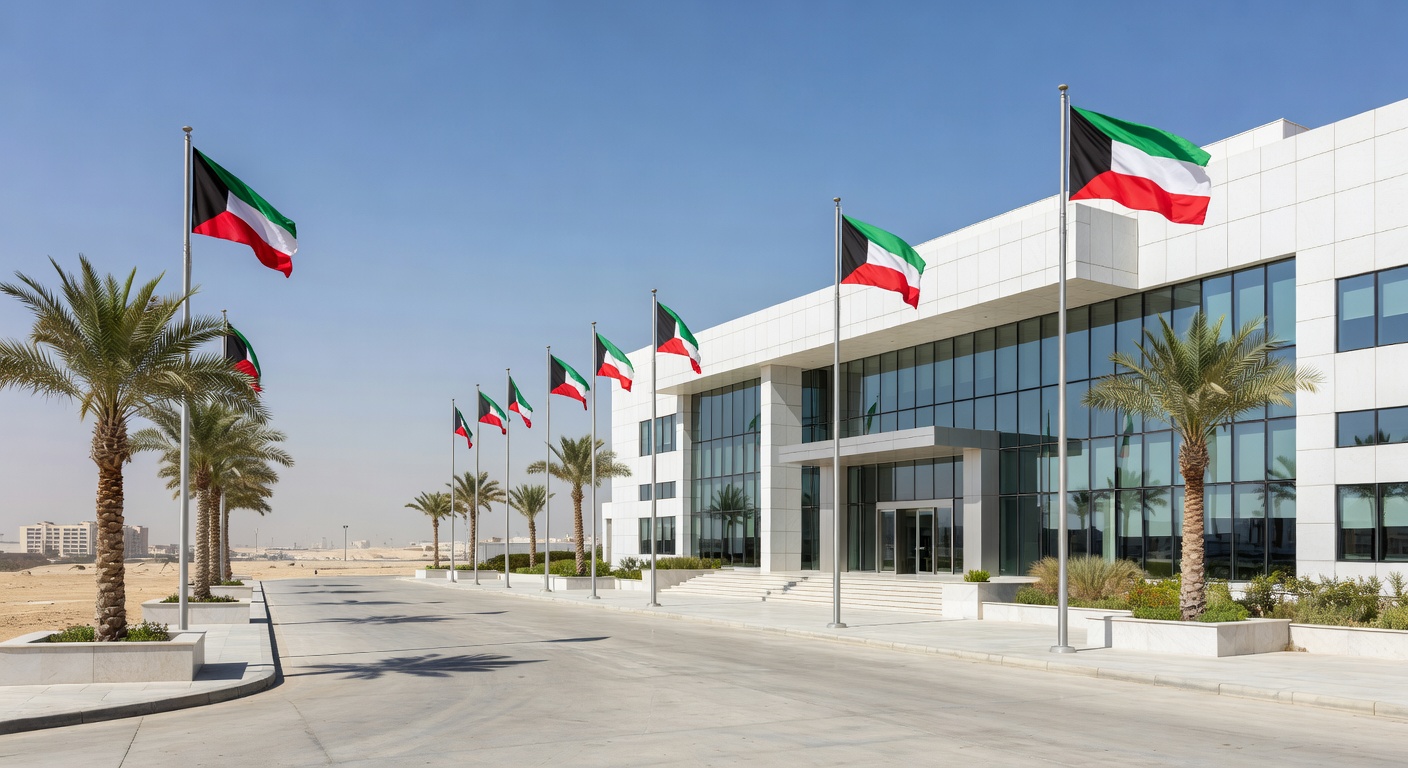
Kuwait Interior Ministry and Army General Staff Discuss Enhanced Security Coordination
Kuwait Interior Ministry and Army General Staff officials met on Friday to discuss enhanced security coordination. Major General Abdulwahab Ahmed Al-Wuhaib and Lieutenant General Khalid Dirj Saad Al-Shuraian reviewed cooperation at the ministry headquarters. The talks aimed to improve joint readiness and integration for national stability.
The undersecretary of the Ministry of Interior and the chief of the Army General Staff reviewed a range of issues of mutual interest. They examined specific ways to enhance cooperation and operational integration between the ministry and the General Staff. Focus was placed on raising the level of joint readiness and the capacity to respond to evolving security challenges. The officials discussed how to achieve deeper integration to support the national security system.
Deeper integration between the military and security agencies was deemed essential for maintaining stability in the country. The meeting highlighted the importance of this collaboration in keeping pace with current security developments. Both parties agreed on the need to intensify joint efforts across various domains of common concern. This step is part of broader measures to enhance performance efficiency in security operations.
Al-Wuhaib recently visited the Special Security Forces where he reviewed their workflow and operational readiness. He was briefed on coordination mechanisms with other military and security entities during the inspection. The undersecretary underlined that ongoing field operations show close coordination and harmony among the Kuwait Army, the Ministry of Interior and the Kuwait National Guard. He described this integration as a key pillar for effective response to challenges.
Both Al-Wuhaib and Al-Shuraian reaffirmed their commitment to continued coordination and intensified joint work. They stressed the significance of these efforts in enhancing overall performance efficiency. The leaders expressed their dedication to keeping abreast of security developments through sustained partnership. The meeting concluded with a shared understanding on advancing these objectives.
The discussions between the Interior Ministry and the Army General Staff form part of Kuwait’s efforts to strengthen its security apparatus. Regular high-level engagements ensure that strategies are aligned and resources are utilized optimally. This approach has been evident in multiple recent activities involving senior security officials. The commitment to integration helps build a resilient system capable of addressing diverse security requirements.