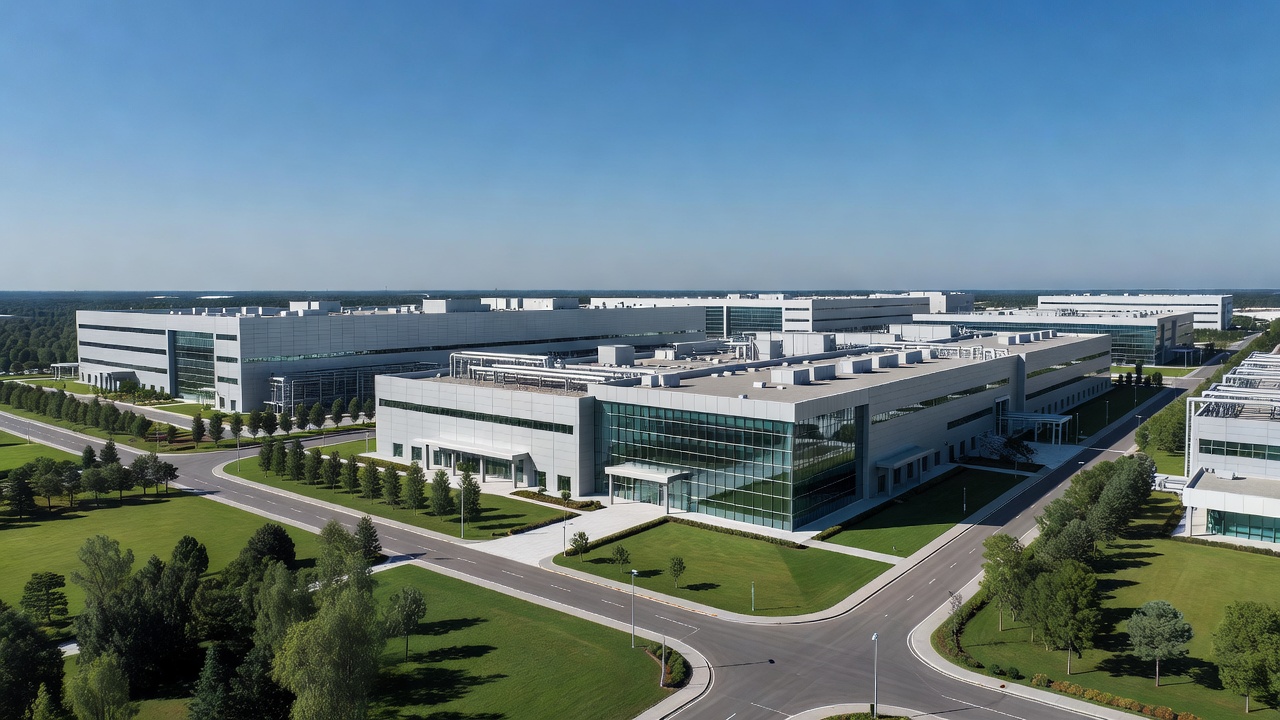
The Arab Times detailed how the artificial intelligence boom is compelling Taiwan Semiconductor Manufacturing Company to pursue an unprecedented expansion of its manufacturing base. TSMC is building 25 wafer fabrication and advanced packaging facilities in 2026, a pace four to five times its historical norm of five or six plants per year. Deputy co-chief operating officer Cliff Hou described the current construction rate as unprecedented while speaking at industry events this week. He noted that the company is still unable to fully meet AI-related demand despite the accelerated buildout.
According to TSMC’s 2025 annual report, the foundry posted record revenue of $122.4 billion that year, marking a 35.9 percent rise from 2024, with artificial intelligence applications driving much of the growth. The company has since increased its capital spending guidance for 2026 to between $60 billion and $64 billion. This figure represents the largest annual capital budget in semiconductor industry history. High-performance computing, largely tied to AI, accounted for 61 percent of TSMC’s sales in the first quarter of 2026, Venture Atlas data shows.
TSMC is simultaneously globalising its production to mitigate risks and serve regional markets, with major investments in the United States, Japan and Europe. The firm has raised its total commitment to the Arizona campus to around $265 billion following an additional $100 billion pledge in July 2026, Reuters reported. These overseas facilities will focus on advanced nodes, including the 3-nanometer technology entering volume production at multiple sites starting in 2027. Japan’s second fab in Kumamoto has been upgraded to support 3nm chips by 2028.
Advanced packaging has emerged as a critical bottleneck for AI chip assembly, prompting TSMC to expand CoWoS capacity at an annual rate of roughly 80 percent. Demand for such packaging is projected to reach one million wafers in 2026, nearly triple the 2024 level, according to TrendForce. The company is also outsourcing portions of the process to partners to alleviate pressure from major clients including Nvidia, which has reserved a substantial share of the capacity.
TSMC holds approximately 73 percent of the global pure-play foundry market in 2026, Counterpoint Research figures indicate. Its 2-nanometer technology achieved high-volume manufacturing in the fourth quarter of 2025 with strong yields. The firm anticipates a rapid ramp-up for this node throughout the current year as AI computation requirements continue to escalate.
In remarks carried by multiple outlets, Hou highlighted that equipment purchase demand has jumped 90 percent since the end of 2025, reaching 1.9 times initial projections. «I have never seen demand grow at such a rapid pace and frequency in the past 30 years,» he said. The surge is creating strains across the supply chain, including for semiconductor substrates that require increasingly complex specifications.
TSMC expects its full-year 2026 revenue to increase by more than 30 percent in US dollar terms, with some forecasts pointing even higher based on sustained AI momentum. The company is coordinating with Taiwanese authorities to establish training facilities and laboratories aimed at boosting advanced packaging expertise. These efforts include a new three-hectare site in Kaohsiung that will feature clean rooms and engineer training programs.
Добавить комментарий